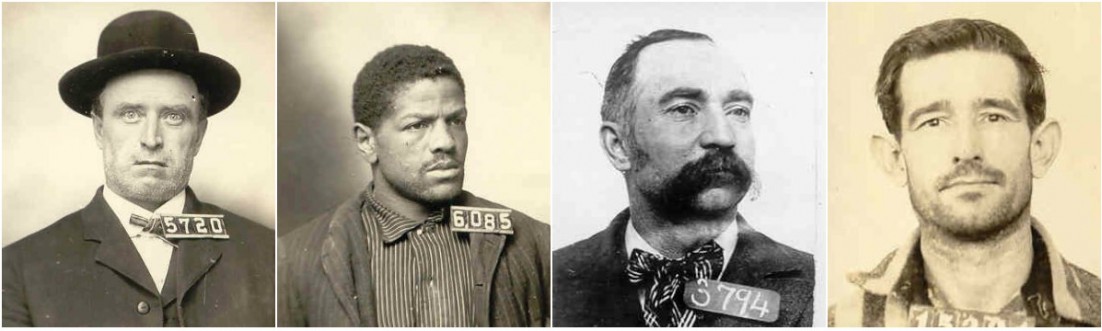
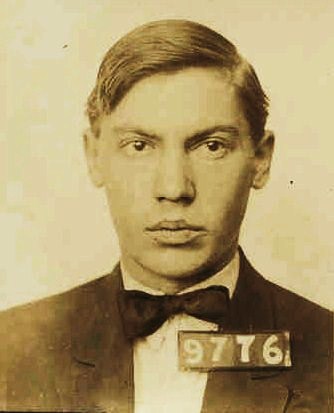
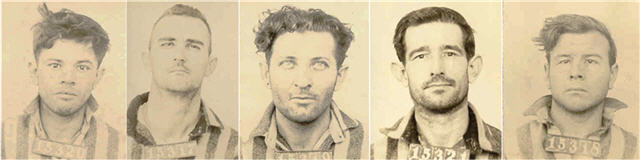
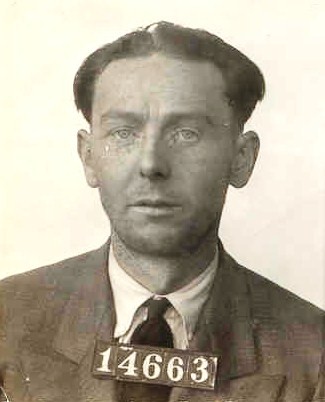
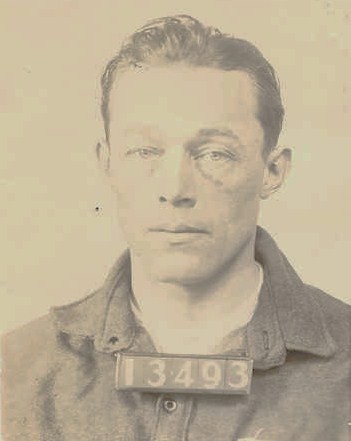
Folsom's 93

The Lives and Crimes of Folsom Prison's Executed Men


Leave a comment

Preserving Folsom’s History

Guided by retired middle school teacher and historian, Ed Hodges, students from Hoover Middle School in San Jose, California are restoring tables manufactured at Folsom prison in the 1920s and ’30s.

The 7’x3′ tables are being sanded, cleaned of graffiti, painted with Varathane, and topped with a sheet of glass. This labor of love costs $250 and the school is seeking those willing to sponsor a table. Read about this great project in the Mercury News and how you can be a sponsor!


1 Comment

The Human Tiger and his underground telegraph

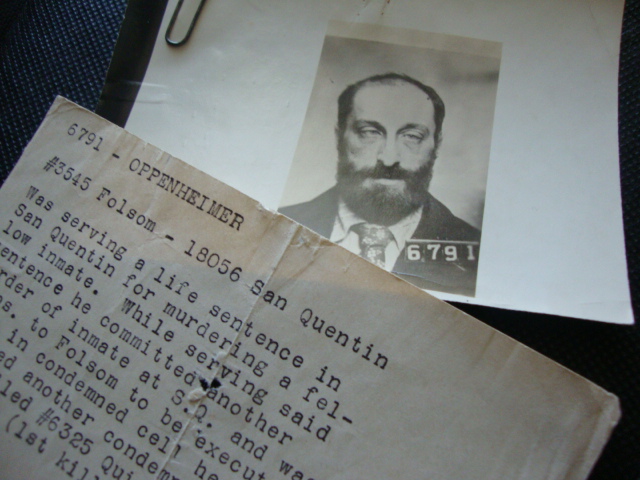
Jacob Oppenheimer, dubbed The Human Tiger, spent a great deal of time in solitary confinement in both Folsom and San Quentin. In fact, of his 18 years behind bars, roughly 16 of them were in solitary. Only during the last few years before his execution at Folsom in 1913, did guards allow him light, and reading and writing materials. During those years, Oppenheimer penned many essays, letters, and even his autobiography. An extraordinary writer, Oppenheimer possessed a vast vocabulary, intelligence and incredible insight into the outside world and the human psyche.

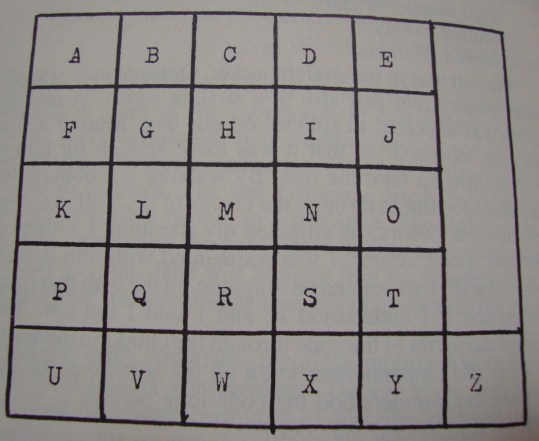
During his dark and lonely days, Oppenheimer developed and perfected a method of communicating with other inmates in the solitary ward, also called the “incorrigible” cells. The method, similar to Morse Code, began with a simple alphabetical diagram Oppenheimer created:

The only time Oppenheimer would speak to the other solitary inmates would be in the prison yard during their thirty minute-a-week exercise where he’d disclose the diagram. The other prisoners then scratched it into a hidden area on the wall of their cell.

Oppenheimer explained to his fellow cons, that a certain amount of taps on the wall represented a certain letter. For example, since “Y” was five over and five down, the inmate would use five taps—twice. “E” the fifth letter, required one tap, then five. At the end of each word or line, the messenger then tapped twice. Over time, other inmates divulged Oppenheimer’s communication system to the new arrivals in the ward, thus saving Oppenheimer the time and trouble.

Oppenheimer’s inventiveness and intelligence far exceeded that of the average convict at Folsom. Despite his dreary solitude, Oppenheimer’s writings exhibited an optimism not common for a condemned incorrigible.  In his letters to his attorney, this “caged tiger” often expressed gratitude and even joy. I’ll leave you with a sentence he wrote, ending a letter written on Christmas Eve 1907,  that seemed to exemplify his usual contentment.

 “The solitude which surrounds me is delightful to a poet for in soothing meditation I soar to heights among the fleecy clouds and into the blue atmosphere. . .”


1 Comment

The Effects of the 1906 San Francisco Earthquake on Crime

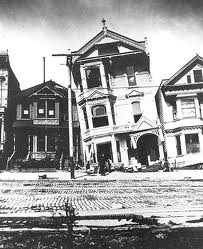
On April 18, 1906, San Francisco shook with the estimated magnitude of 7.9, though some believe it reached 8.25. Subsequent fires from ruptured gas lines then ravaged the city, causing an estimated 90% of the total damage to the city. Just five days earlier, Folsom  executed its 22nd man, William Gray.

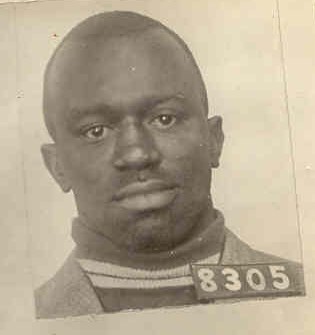
Gray

Two hours east of the quake, the gray granite fortress surely felt the early morning rumble, but suffered little to no damage. San Quentin, however, experienced an influx of inmates as prisoners from San Francisco jails were transported to the Marin County penitentiary.

It’s natural to assume crime would run rampant while law enforcement concentrated their efforts on finding survivors and putting their city back together. Surprisingly, crime took a break in the wake of the quake. James Johnston, Folsom’s warden in 1912, called it “a great purifier.”

“It scared the sin out of some people and tore masks off make-believers. Everybody cooked in the street and many slept in the parks, where fresh air and new thoughts could get at them. Button-pushers and bell-ringers took their turn with day laborers cleaning up the debris. There were no saloons to open or close, and nobody seemed to want a drink. The people had before them important business of planning and building a new city while the old still trembled and burned. There was little looting and pillaging.”

Stories are told about my great-great uncle, Tom (who is responsible for me writing Folsom’s 93 in the first place) and his role in the quake. Tom was a teenager in 1906 and his brother (or father—not sure which) was the fire chief of San Francisco—or maybe he was the police chief at the time . . . Anyway, Tom and his friends navigated the city on roller skates, collecting and delivering bodies to the morgue. Between the earthquake and the fire, the death toll reached well over 3,000 and over half of its 410, 000 residents became homeless.

The reprieve from crime didn’t last long. Gas-pipe thugs terrorized the already-stricken residents of San Fran and soon, it was business as usual.


3 Comments

So you say you’re innocent, huh?

Image

I’m often asked if I believe any of Folsom’s 93 were innocent. “Absolutely,” I usually reply, but can I prove it? Possibly, but when we’re talking about crimes from well over a hundred years ago, original evidence is long gone. Early investigation methods didn’t include the use of crime scene tape, latex gloves, or handy Ziploc bags to preserve and protect evidence. And DNA? Forgetaboutit! That technology came in the mid-1970s. Universal fingerprinting didn’t come along until the 1940s and before that, correctly identifying suspects by their prints oftentimes proved to be unreliable and inaccurate. At the turn of the 20th century, “beyond a reasonable doubt” didn’t exist and a few of the 93 hung by the threads of circumstantial evidence.

Little could separate the guilty from the innocent: a strand of hair resembling the victim found on or near the suspect, association with known criminals, or the color of your skin . . .

Not surprising, many of Folsom’s condemned minorities were doomed the moment of arrest; referred to in the newspapers as the N-word, half-breeds, or ignorant. Even their court-appointed attorney didn’t always have their client’s best interests at hand, or they themselves experienced backlash over representing a minority. The language barrier provided another opportunity for the law to take advantage of a foreign-born suspect, especially since interpreters were few and far between. Investigators easily manipulated an interrogation or testimony by using words the accused couldn’t comprehend.

Judges also didn’t sequester juries to the extent they do today, nor were the juries protected from “tampering.” After the selection of the 12 peers, newspapermen often printed the full names of the jurors in the next day’s issue. Jurors were even often caught dozing off, or snoring away during the trial. Did the judge reprimand the sleepy juror? No.

For some, the appeals process didn’t offer much hope either. Defense attorneys often bowed out after a jury found their court-appointed client guilty. The condemned man had only the hope that the governor would heed his plea for clemency or pardon.

Image

Throughout the course of my research, I struggled to see how some of these men could be found guilty. I think it’s ignorant to assume they each received a fair trial and due process of the law. Today, technology has aided investigators when solving crimes and in many cases, free the wrongfully convicted.

 The Innocence Project is a nonprofit organization dedicated to proving the innocence of those convicted of a crime they didn’t commit. Since its start in 1992, the organization has exonerated 268 people, including 17 who sat on death row. Despite the advances in crime investigation, it’s apparent these methods can’t always stop innocent people from going to prison and for some of Folsom’s 93, this potentially life-saving technology came too late.


3 Comments

A Creative Escape Attempt

Many considered Folsom prison to be the “end of the line.” For some, that weighed heavily on their minds.

The formidable, gray granite walls and dark cramped cells did nothing for a prisoner’s morale. The prison was far from inviting, but would gladly swallow inmates up. Convicts spent much of their idle time formulating plots to escape: hiding in dark corners or under floorboards, taking prison officials hostage, or simply sneaking away from the yard. Folsom’s history is littered with tales of escapes, some successful, others not.

Prison authorities were well-aware of this and considered it when selecting a locale for the penitentiary. They chose the area based on several components: the rich granite deposits, the  proximity of the American River, and the harsh surrounding terrain. Inmates saw these as inconveniences. On top of that, sentinel guards stood watch in towers holding gatling guns, trained to spot (and shoot) a fleeing inmate.

Folsom inmates were surrounded by reasons to not escape, yet it didn’t stop men from trying.

Carl F. Reese and a companion robbed a California theater in 1930, making off with nearly $4000. Captured in Waco, Texas, Reese returned to California to face trial. He failed to break from the county jail after cutting a hole through the brick of his cell using a sharpened file. Perhaps he knew escaping from Folsom prison wouldn’t be an easy task.

Nevertheless, he gave it the old college try.

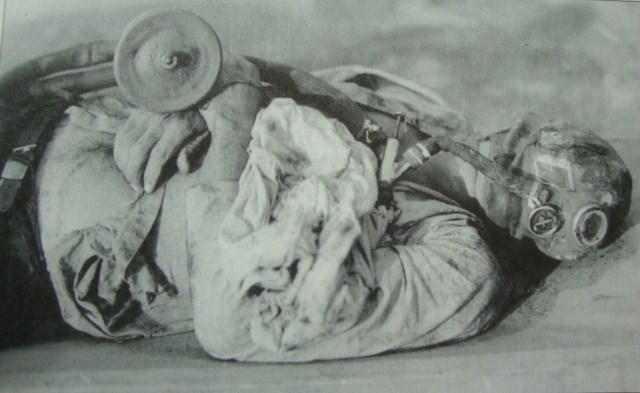
In September of 1932, guards reported Reese missing after he didn’t return from his work in the quarry. Searchers found a hole cut in the wire fence near the powerhouse, by the canal. Guards discovered Reese’s body on the bottom of the canal, his shoes weighed down with iron bars.

Image

Using a rubber football bladder, Reese contrived a sort of diving helmet, complete with a glass eye piece. A rubber tube inserted into the helmet acted as a valve to provide air which was then attached to a tin can so it could float above water. Reese also fashioned an air pump out of a bicycle pump. He then used iron bars to weigh himself down, with the intention of walking along the bottom of the canal to freedom. Warden Court Smith surmised that the valve failed to work, therefore, allowing water to pour into the convict’s helmet. Unable to swim to the top due to the heavy weights in his shoes, Reese drowned.

Considering the amount of items used, it could be assumed that Reese’s escape plot began to take shape the moment he stepped into the prison, collecting the parts and tools to construct his makeshift scuba suit. Officials found a second helmet on the edge of the canal, apparently abandoned by a companion who witnessed the suit’s inventor drown. Probably a wise decision.


1 Comment

Any Last Requests?

Image—Folsom Death House, circa 1933

“Any final requests?” Some of these men never thought about this until asked the question. Warden James Johnston in 1912 granted most requests (within reason) while refusing those that involved drugs or alcohol, sometimes even tobacco. The condemned inmate also received two final meals: dinner and breakfast. Typically, the dinner came with music from a phonograph that the warden brought in. For many, the night carried on with music, singing, and noshing on a lavish dinner.

27—Edward Delehanty

Number 27, Edward Delehanty asked for pies, cakes, chickens, candies and other delicacies. “Fetch on yo chicken and chocolate cake and bring me a watermelon so big I can hide mah head in it.” Fellow inmates played guitars and banjos while Delehanty danced. That night in 1912, the usually dark and cold Condemned Row brightened with laughter and singing. Delehanty then fell morose and without touching the food, insisted Warden Johnston give it all to the musicians.  As a final contribution Delehanty asked officials to put a record containing William J. Bryan’s speech, “Immortality.”

54—Charles Peevia, alias Charles Gafford

Charles Peevia, Folsom’s 54th execution, dined on pork chops and watermelon.

37—Kosta Kromphold

Kosta Kromhold, Folsom’s 37th execution, hanged for killing a police officer.  He requested to hear the tune, “If I only had a thousand Lives to Live.”

28—Jacob Oppenheimer

Jake Oppenehimer, number 28, spent his last night smoking cigars and listening to his favorite music. “Play lively tunes,” he ordered, particularly favoring John Philip Souse’s band selections. “Taps” ended the concert at nine o’clock and the doomed man fell asleep with a handkerchief over his face. He decided to forgo his last breakfast, as his stomach ached from the rich foods and candies outside supporters sent to his cell the day before. The usual breakfast consisted of pancakes, ham, eggs, and coffee. Although bacon, omelets, and toast were often served in addition to the usual fare.


61—Anthony Brown, 63—Walter Burke, 65—James Gleason, 64—James Gregg, 62—Roy Stokes

In 1930, when Walter Burke and James Gregg, two of the five men executed for their role in the Thanksgiving Day Riot of 1927, learned they could request anything for their final dinner, they ordered an elaborate feast. Burke called for chicken croquettes and Gregg for bacon and eggs. In addition, their riot cohorts, Anthony Brown, James Gleason, and Roy Stokes savored sweet potatoes, baked squash, bread and butter, peach pie and homemade donuts and coffee. In the morning, they enjoyed a hearty breakfast of cereal, fried eggs, fried potatoes, corn griddle cakes and maple syrup, peaches, hot muffins, buttered toast and, coffee.

57—Willard Shannon

Number 57, Willard Shannon had toast, strawberries and chocolate. A borrowed phonograph played “The Sidewalks of New York,” over and over again in Shannon’s cell while he sat smoking nervously and listening, waiting for the death hour.

2—Ivan Kovalev

There were some who couldn’t stomach the idea of eating just before dying, many refusing to partake in the privilege. Ivan Kovalev, executed in 1896, declined his last meal. The warden then offered him whiskey. He opted for a glass of milk.

69—Wilbur McCabe

Quite possibly, one of the strangest requests came from Wilbur McCabe, number 69 in 1931, who asked for a head of lettuce. He of course, received it.

55—Ray Arnold

Although not all requests involved food and entertainment. In 1927, Ray Arnold became the 55th execution after a jury found him guilty of complicity. Stoutly declaring his innocence, he stood on the scaffold, legs and arms bound, and made his final request:

“I am innocent. Please cut this noose into 13 pieces and give one to each juror and the judge who convicted me.”

The State Board of Prison Directors refused to honor his request.

WHAT WOULD YOUR LAST REQUESTS BE?


Leave a comment

Toys Made by Prisoners: Would You Buy?

“Oh, look, Susie! Your dolly even comes with her own mug shot and fingerprinting kit!”

Perhaps like the American Girl dolls, prison-made ones would come with names like “Back Alley” Sally, Machine Gun Mary or Rachel the Rat. (Folsom’s Condemned Row came to be known as the “back alley”).

image

Ok, that’s a bit of an exaggeration, but in 1921, Folsom prison warden Court Smith, proposed opening a toyshop at the prison. Smith and San Quentin’s warden, James Johnston, both recommended the men would receive compensation for their work and hopefully learn skills to find legitimate jobs once released from the clink.

The idea creates quite a picture in one’s mind: the calloused, scarred hands of hardened criminals making dolls and stuffed animals for children; bolts of floral-patterned fabric lining the gray granite walls and colorful paper decorations hanging from the ceiling.

Surely, there would be jovial Christmas tunes playing in the background. Instead of letters to the North Pole, children everywhere would address their holiday wish list to Repressa, California.

At Folsom, inmates were used to working. They basically built the prison themselves, as well  as all later additions using the granite quarried from the surrounding area. For a brief time, Folsom housed a furniture shop and at San Quentin, scores of inmates produced jute mill bags. Using all convict labor, the toy factory would have been built using stone from the quarry and employed prison stonemasons, machinists, and eventually, manufacturers.

The proposed factory failed to receive approval from Legislation, who felt there would have been too much competition from Germany and other foreign countries to warrant the idea. So unfortunately, finding a rare Folsom “Sandy The Squealer” doll with a anchor tattoo stitched into her arm, isn’t going to show up at the Folsom Prison Museum.

WHAT DO YOU THINK OF PRISONERS MAKING TOYS?


2 Comments

An Extraordinary Find

Everyone in Folsom’s 93 is dead. That makes it difficult to score an interview with them, which would be very helpful. I’m forced to rely upon items they’ve left behind. Letters, newspaper articles, transcripts and other legal documents are my means of “getting the story.” I’ve also been lucky enough to find descendants of these men, their victims, or former Folsom employees, who have shared some stories with me. When early Folsom staff retired or resigned, they often took with them items; keepsakes from the prison. At the time, they seemed nothing more than a souvenir, but as years went by and they passed away, the items remained stored away and forgotten. Julie Davis of the Folsom Prison Museum said that Folsom antiquities have turned up at garage sales—sold to someone for just a few dollars. If we’re lucky, the buyer sees the  significance of the item and brings it to the museum.

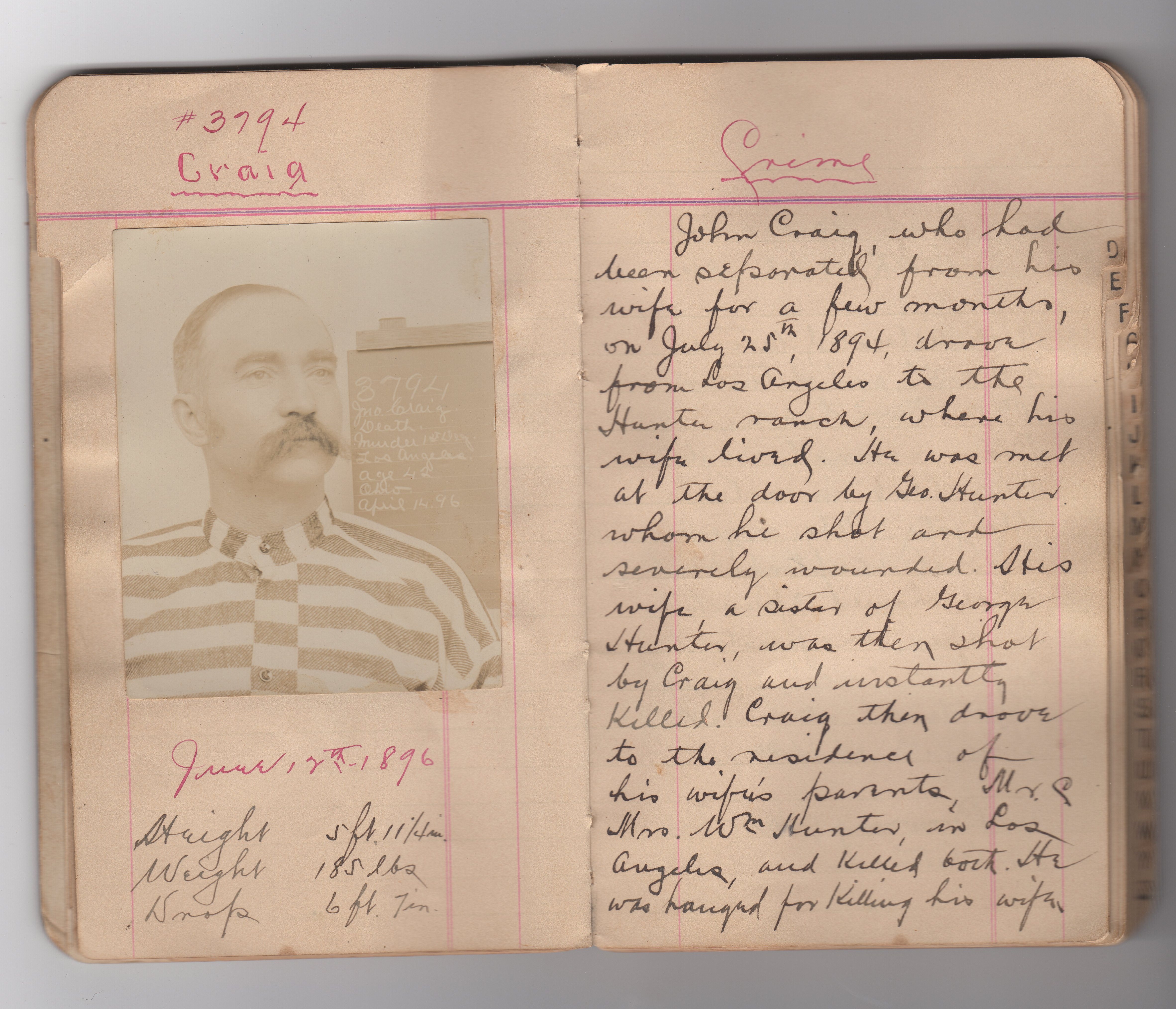
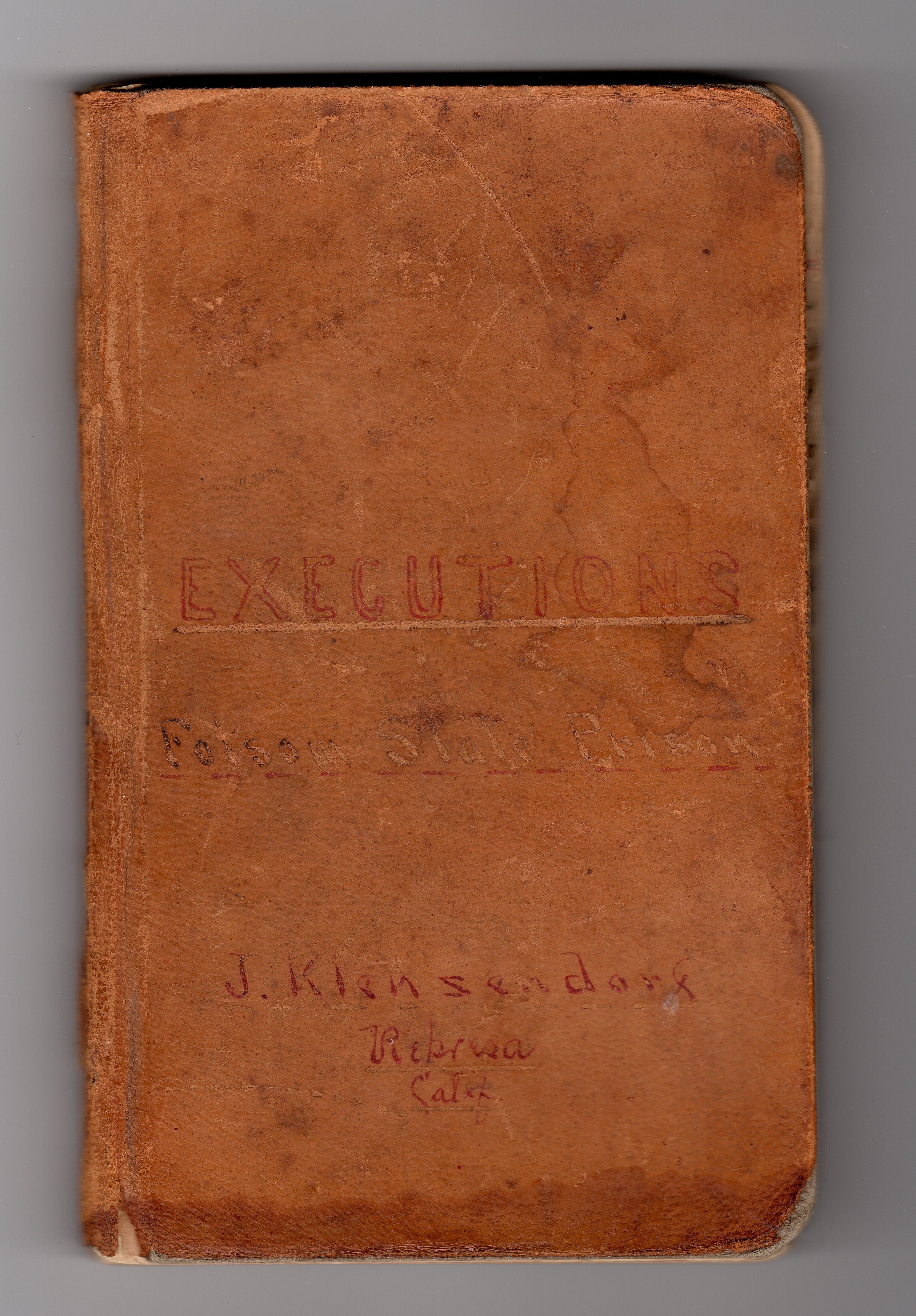
Imagine my delight when a gentleman named John Ackerman emailed me with his extraordinary find: A small book documenting the first 14 executions at Folsom prison. His Great-Grandfather, John Klenzendorf served as a Folsom prison guard at the turn of the 20th century. In 1903, Klenzendorf found himself thrust into the middle of a prison break where 13 inmates escaped and only 6 were recaptured. Two of the six hanged for their roles in the break that left a prison guard dead. Inmates took Klenzendorf, the warden, and other guards hostage as they fled the prison. The escapees let Klenzendorf go the following day, one of the last hostages to be released.

It appears Klenzendorf kept his own journal of the executions while he served as a guard. This book is actually an address book. If you look closely at the top picture, you’ll see the alphabetical tabs on the right side. From 1895 to 1902, Klenzendorf documented the executions by listing their name, height, length of the rope, and a brief story of the man’s crime. The top picture is of John Craig, Folsom’s 3rd execution, yet this journal lists him as number four. I find it very peculiar that Klenzendorf wrote the wrong date in his book, as I can only guess he witnessed the execution. My theory is that Paulo Kamaunu’s (#4) original execution date got recorded, which did come before Craig’s. Kamaunu’s date changed after he lost his appeal.

I don’t believe it’s unusual guards kept these kinds of personal documents. Executions during this time were still a fairly new practice in 1902 for Folsom prison, even though men had been the guest of honor at these “neck-tie parties” in California since 1851.

I’d love to get my hands on this book, but I’ll have to settle with admiring it from afar since it resides a couple thousand miles from me. I’d like to thank John for contacting me and supplying the wonderful photos of it. John will be meeting with Jim Brown, curator of the Folsom Prison Museum to determine more of the history behind the journal. I think I’m just as anxious as John to hear what he learns. It’s always great to encounter people who appreciate the historical value of these items and want to continue to preserve it. Thanks to John and Jim, this piece of history will be saved.


Leave a comment

No Excuses . . . Time to Finish!

Have you ever seen such a beautiful stack of documents? That’s about 620 pages. 620 pages from the California State Archives that arrived today. When the doorbell rang, I just knew. I glanced out the window and saw a hint of a white truck and I just knew.  The FedEx man could clearly see my unbridled excitement and probably thought I was about to kiss him. Maybe that happens often with these guys, but I only had eyes for the box I was holding.

When my husband came out of his office and saw my obvious glee, I told him to guess what I got. “Cheese?” Huh? Ok, the only other time I got that excited over a package was when I ordered some nut cheeses from some place on the east coast and apparently, that memory stuck with him. Once we got past the cheese thing, he remarked. “You’re gonna be busy this weekend.” Darn tootin’. Wish me luck.


11 Comments

My Time in Prison

Yes, it has been about a year since I last posted. I have been up to my neck in research and have acquired roughly 800,000 words of notes thus far. I suppose it’s time to somehow put it all together in a cohesive (and coherent) form resembling a book.
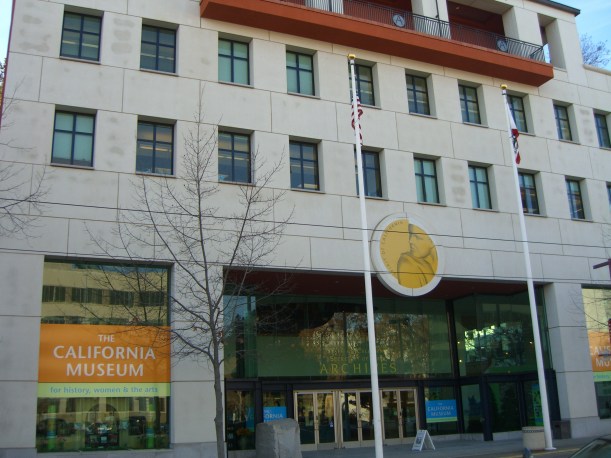
I just returned from my second trip to Sacramento after spending 9 days at the State Archives poring over court transcripts, photographs, letters, and applications for pardon.

Thanks to the archives’ handy online database, I emailed them ahead of time with a list of documents I wanted to see. You’ll have to only imagine the happy-history nerd-researcher-writer dance I did when I saw the full cart of documents, ready for me to dive into. The wonderful archivists take their work very seriously and were happy to assist me with whatever I needed—they are a stellar group of people.

There is certainly a bit of anxiety that accompanies handling these old and delicate pages of history. In fact, many documents had never been looked at since being filed—the archivists actually had to cut open some of the envelopes containing materials, sealed decades earlier. A time capsule of sorts. I held hand-written letters from condemned men to the Governor, pleading for their lives.
With my laptop at the ready to take notes, I quickly realized my fingers couldn’t keep up with the amount of information to go through. I did the best I could, but in about 3 weeks, I should be receiving 620 copied pages from the archives. There was an overwhelming amount of history to dig through and I can’t tell you how fast 6-1/2 hours went by everyday in that research room.

At one point I opened up a box (Christmas—to a researcher) and found about 8 volumes of transcripts for just one inmate. But considering this particular condemned man racked up reprieved 9 times, there was bound to be a plethora of documents. This box represented a tiny fraction of the information on this man.

Staying in the downtown area, I walked everywhere. In fact, I compiled my own walking tour of crime scenes. I was surrounded by several different sites of where some crimes took place. At 17th and L stands the St. John’s Lutheran Church, once called the German Lutheran Church and where a ten-year-old girl became the victim of David Fountain, Folsom’s 31st hanging.

The pastor was kind enough to let me poke around the bell tower where the unfortunate young girl died of strangulation in 1914. It also happened to be one of the only areas of the church not renovated. I took several pictures, but as I got closer to the rickety old ladder leading to the belfry, I determined that was my limit.
At 12th and L, across the street from the State Capitol is the site of one of Sac’s most gruesome crimes. The Webers, an elderly couple were butchered in their home and place of business by Ivan Kovalev, a Russian who had escaped prison in Siberia. He became Folsom’s 2nd execution. The Hyatt Regency now occupies the site. All together, I walked past about 10 different sites, but most of the buildings or houses no longer exist.

Ivan Kovalev

I even stumbled into Old Sacramento, a 28-acre National Historic Landmark District and State Historic Park along the Sacramento River. Aside from the loud motorcycles, cars, and swarms of tourists, you’d think you landed in the Wild West.
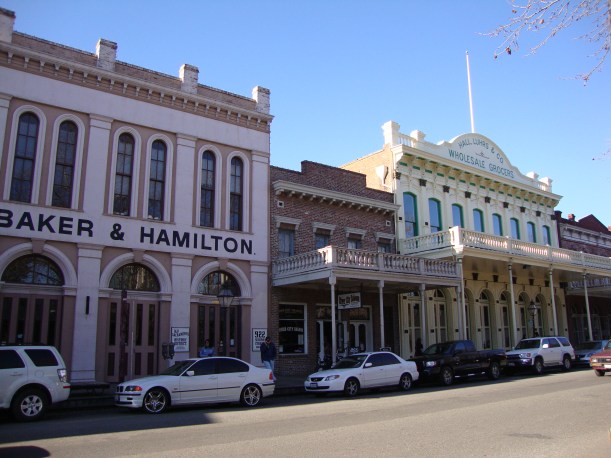
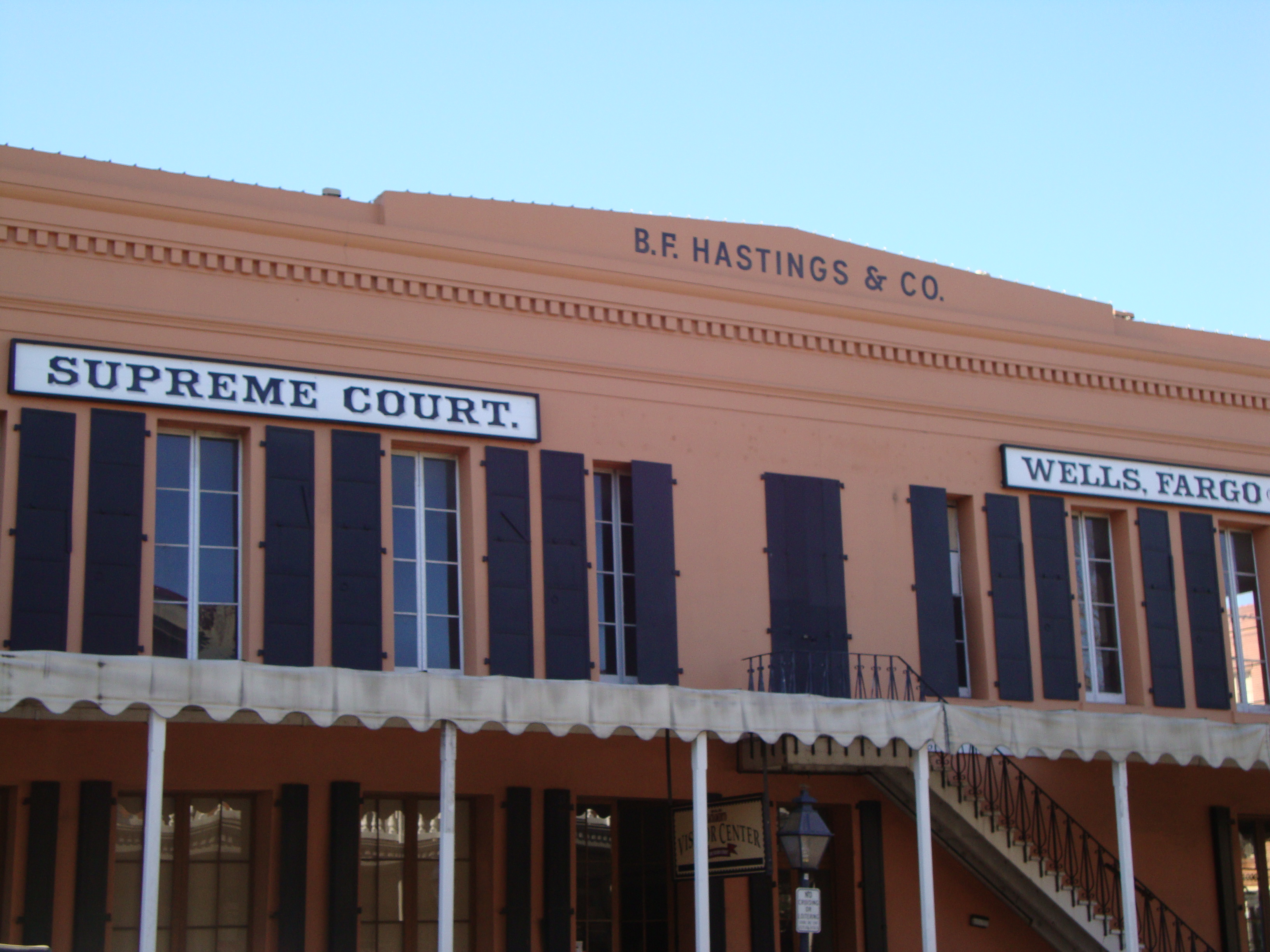
The old Supreme Court building still exists and is fully restored. However, because it is not handicapped accessible, it is closed to the public.

This area is also known as being the stage for many wars between two Chinese gangs in the mid 1800s to the early 1900s. This is where Lee Gong, a cigar shop owner was gunned down in his store, leading to Folsom’s very first execution: Chin Hane, an accused Highbinder, or Chinese hit man.

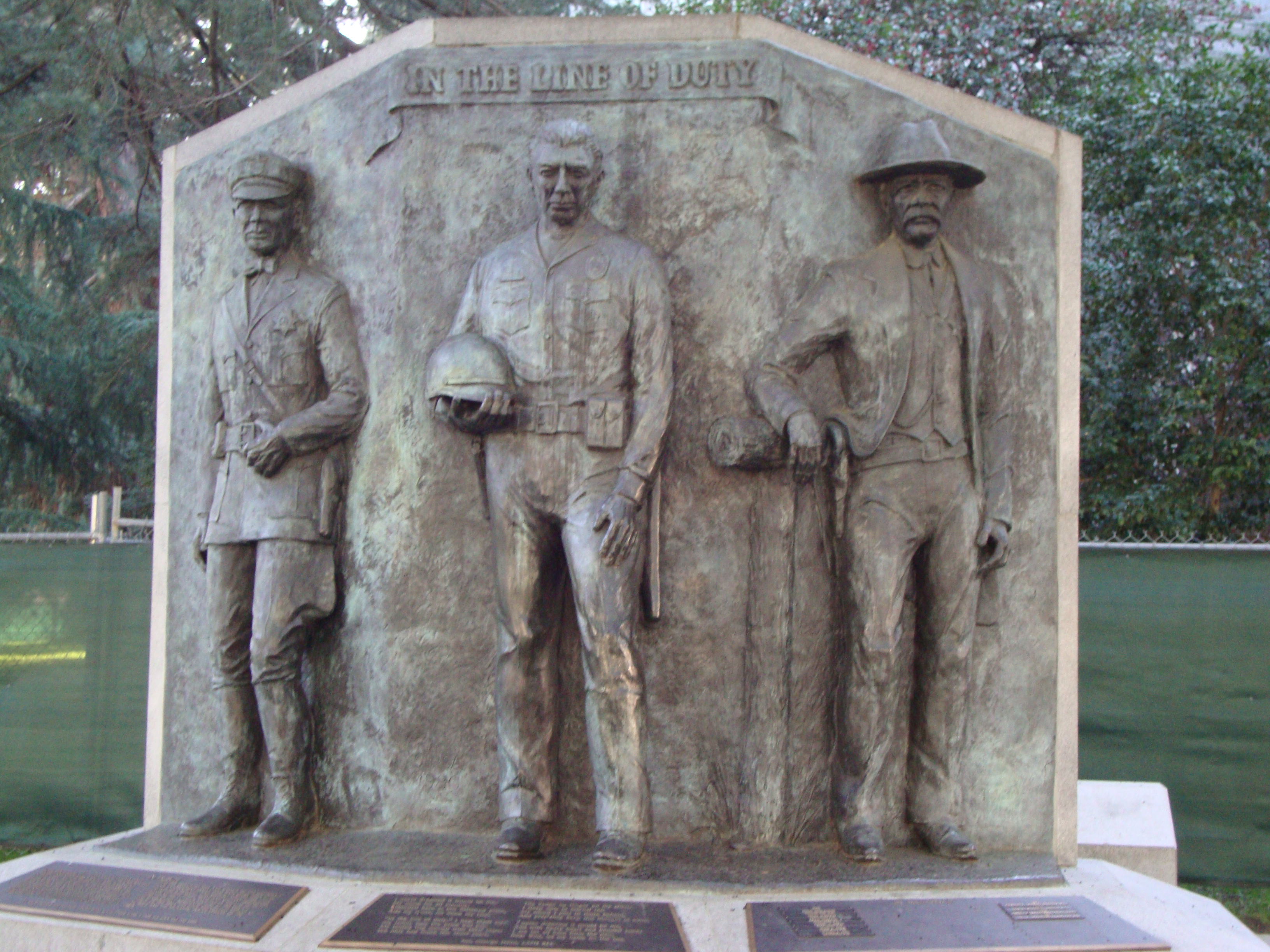
Across from the Capitol is the California Peace Officers Memorial, their names surrounding the memorial.

Ray Singleton, a guard at Folsom was killed as well as Warden Clarence Larkin, of Folsom and was the first and only warden of California’s penitentiaries to be killed while on duty.
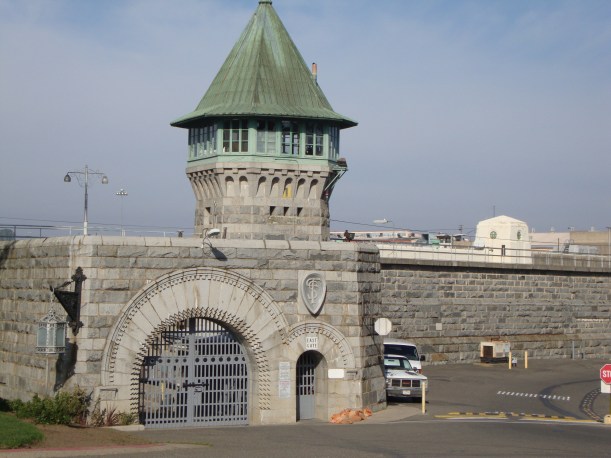
Bra-less at Folsom Prison

My mom joined me for the last two days of the trip, so what’s the first thing I wanted to do? Go to Folsom Prison, of course. I contacted Lieutenant Paul Baker, Public Information Officer of the prison. After providing him with the proper information for background checks, he sent me some tour information, including a dress code. As you can imagine, hot pants and halter tops are frowned upon, so best to avoid those. Prison officials ask that you don’t wear denim, certain colors, certain fabrics, and absolutely no blue, orange, red or gold jumpsuits. For security purposes, avoid wearing metal such as jewelry and under wire bras. I spend a great deal of time telling my mother to make sure she brings an alternative and I’m the one who forgets.  Assuming the process of a strip search would not be the highlight of my day, I was bra-less at Folsom prison. I wore a few layers. I was more disappointed I couldn’t bring in a camera. I document everything, so unable to take pictures while on this tour was agony. I’d like to give a very, very big thank you to Linda Tucker, of  Linda’s Koality Photography who allowed me to use many of the following pictures. She supplies many of the current Folsom prison photographs on the Folsom Prison Museum’s website and was so incredibly nice to let me use the photos (even after I posted them). Thank you, Linda!

We arrived at the prison ready, but not having the slightest idea as to what the tour entails. We were told to wear good shoes and be prepared for 2-3 hours of walking. When the Entrance Gate Officer asked us if someone had explained The Hostage Policy to us, I could tell my mother contemplated backing out, but I was bound and determined to go through with it. Basically, The Hostage Policy is to ensure the convict does not escape, so if I’m in the way…well, that’s the risk I take. We were told that if you start to panic, just look up. Stationed throughout the prison, above and out of reach of inmates, are guards with guns. There’s always someone watching.

Don’t expect your tour guides to carry guns—officers at Folsom have never carried such weapons, as they can easily be used against them. Instead, they carry a baton, a whistle, and cans of defensive pepper spray.

The prison is 130 years old and all of the original buildings are still in use, including the cell blocks—they are still opened and closed with a key, as the Entrance Officer explained, it’s just like Barney Fife in Mayberry. Well sort of. In fact, the prison didn’t install metal detectors until recently.

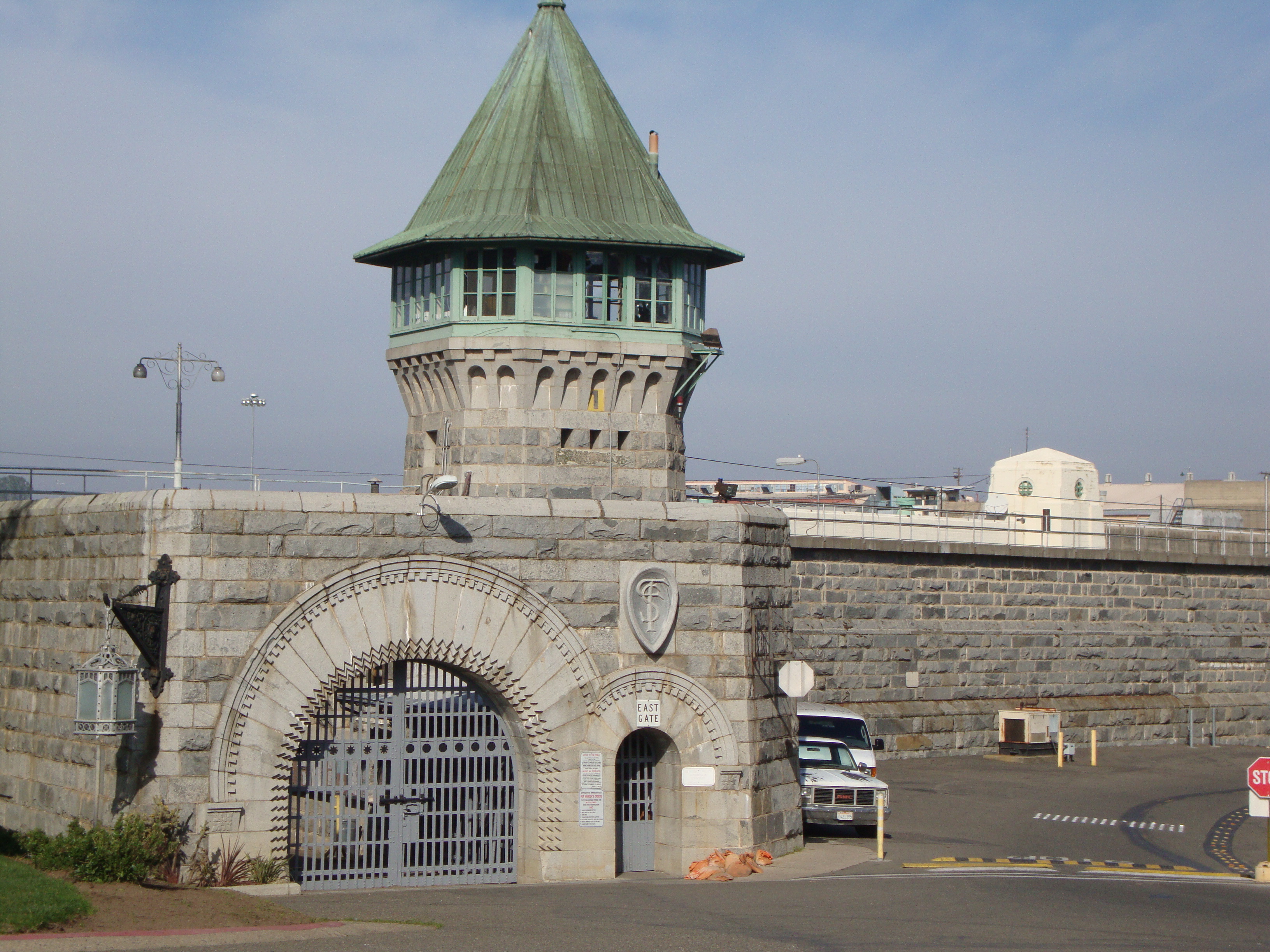
Dragging my mother along, we entered through the famous East Gate where we met Officer Hamblen, who would be accompanying us on the tour.

Being surrounded by the formidable gray granite walls (built using convict labor) is quite extraordinary. The walls are 30 feet tall and buried 15 feet deep. Digging your way out is impossible.

One of the “sites”on the tour were the conjugal visit rooms—an unscheduled stop—on this typical tour. Lucky us, huh? Just as we entered, we were informed that it hadn’t been cleaned, so don’t touch anything. No problem. Not exactly the most romantic setting. Linoleum floors, furniture you’d see in a yard marked “FREE,” a bedroom, bathroom, living room, and a kitchen. After about a minute, even Lt. Baker was ready to leave. It’s important to prison officials to help keep the inmates and their families together, especially since those allowed to have these visits will eventually rejoin society.

Providing prisoners with work skills is very important as well. Next time you see a California license plate—think of Folsom, because that’s where it came from.

Yes, they really do make license plates. Every single license plate in California is made by prisoners at Folsom. This was our first encounter with the inmates of Folsom. Anywhere from 75-100 inmates were in the very loud factory manning the machines and presses. It was a little jarring, to say the least. We really had no idea what to expect on the tour, so if you’re not comfortable with the unpredictability and inability to control the surroundings, I highly recommend the tour!

We also learned that the print shop at Folsom is responsible for all California DMV records and even books are translated in Braille. Inmates are given ample opportunities to learn skills such as metal work and welding so that when they are eventually released, they have better chances of landing a legitimate job.

Walking through the factory, I tried to just keep my eyes and ears on Lt. Baker and Officer Hamblen and not on the men who seemed just as surprised to us, as we were of them. Thinking that would be the closest we’d get to the inmates, we were in for a big surprise. We stood by this gate:

and watched hundred of prisoners walk past us and out into the yard.

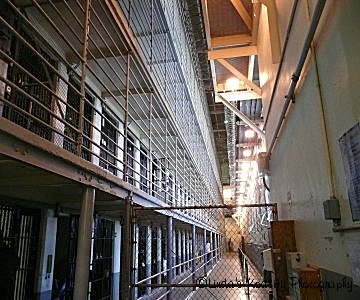
We entered into the main cell block, busy with activity. Inmates milled about, stood in groups, basically went about their daily business—oftentimes, just feet from us. Let me remind you, Folsom is filled with murderers, rapists, child molesters, drug dealers, gang members—you name it. (Lt. Baker informed us that there are four generations of gang members there.) One cell house had 5 tiers of cells—housing two to a cell. This is a 4×8 space for 2 people. It’s important we walked under the tiers and not down the center of building because you may get something thrown at you.

My mom had trouble in this area. Understandable. It wasn’t what we were expecting. She had a difficult time looking into the cells—as if she’d be invading their little space—a space that was really all they had to their name. She understood that they were in the clink for a reason, but it still bothered her. I on the other hand, had no qualms about that, especially as a history nerd and writer. Inmates are allowed to a have a 13” t.v and anything that can fit into 6 magazine/book boxes. I had the opportunity to go inside a single-occupancy cell to look around.
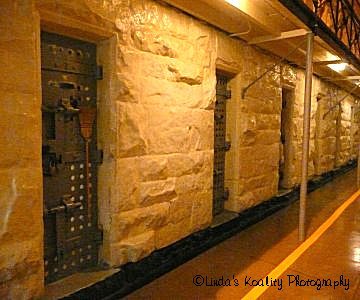
The occupant, who is a life-termer, was of course not in it at the time. The dimly-lit “room” was to be this man’s home for the rest of his life. The walls and shelves were covered with family photos and a few personal belongings that showed his life as a free man and the life of his loved ones since he’s been incarcerated. The vanity doors on his tiny sink were made of cardboard, as were some makeshift doors on a shelf above his bed. To think that this is where you’ll live out the rest of your life, is quite sad. However, at Folsom, 70% of parolees rescind and find themselves surrounded by gray granite again. To some, prison is a safer place than where they came from. Inside, you have the best health care, meds paid for, meals, routine, and a place to sleep. I imagine for some, that is more than what awaits them outside.

Still unaware of where we were headed, we passed a cell containing a man on suicide watch. The 60-something inmate freely told us that he tried to slash his throat.  Following the officers, we walked past a dining room that feeds roughly 200 men at a time, overseen by two guards on the floor and one in a tower.

I was thrilled when I saw where we were headed next.  Straight head, stenciled on a door, were the words, Condemned Row. This is where about 67 men were “ . . . hanged by the neck until dead.” (The death house was moved to another part of the prison in 1931.)

Death House, circa 1933

The original death house was long, narrow, and built of granite. The original 13 steps to the 2nd tier had been removed, but on the other end were a set of stairs leading to the very spot where the condemned men stood. I ran my hands along the gray stone. I also wasn’t going to miss the opportunity to stand inside one of the cells, so when it was offered, I wasted no time. It was surreal. The original steel doors had only a slot for a food tray to slide through. No light, no air. No fun.

There were cells on the lower and top half of the room and the men were rotated towards the top after each of their fellow inmates lost his life. Once a man was hanged, the others moved closer to the trap. When you reached the last cell on the top, and could hear your neighbor being hanged, you knew you were next. These men were constantly reminded of their fate—even from the time of trial. 12 jurors and a judge equals 13; 13 steps to the scaffold; 13 knots on a noose; 13 cells in condemned row. . .

I climbed the stairs to where these men were hanged. I reached the top and looked up to where a noose would have been hanging, then back down at the officers. The narrow room would have been packed full of spectators. At the top of the room and to the right of me were two small windows, each no bigger than 6”x6”. Lt. Baker said that the reasons for the windows varied. Some say it gave the man one last look of the sky before being executed. Others say they were put there to allow the hanged man’s spirit to leave. The room, once thought to teach murderers a lesson, is now being converted into a classroom.

We had to continue on, so we left the condemned row. At one point to our left, men were taking showers in an open room—concealed only by a half-wall. We just looked to our right.

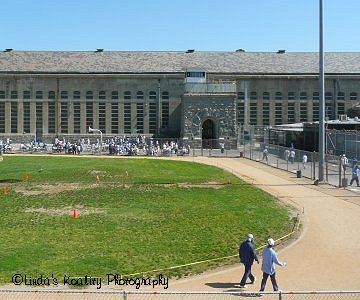
We passed the place Johnny Cash sang the famous “Folsom Prison Blues,” and ended up outside facing the main yard. Inmates filed out from different places around the prison and into the yard. Surely, they wouldn’t take us through the crowds of prisoners. Of course, by now, we knew anything was possible. We went across one end of the yard to where prisoners were lined up to go through the metal detector. We stood against the wall as their belongings, that fit into a clear or mesh bag, were searched, before letting them proceed.

To our dismay, Officer Hamblen was called away. Then there were three. My mom scooted closer to me—as if I’d be able to do anything. Lt. Baker led us out of this doorway and back into the yard.

Our destination was the chapel situated on the opposite side of the yard. Are you kidding me?! Lt Baker cautioned us to not step into the basketball courts as he led us through a crowd of inmates. This is probably the one time I truly felt frightened. I followed Baker and my mom. I had no idea who or what was behind me. Inmates were literally an arms-length away as they watched us; some laughing and jeering. The chapel seemed to edge farther away from us, not closer. I forgot to look up. I should have looked up for a little peace of mind. We passed Blood Alley, an area off the yard that is known for fights and you guessed it, bloody ones.

After what seemed like ages, we arrived at the chapel.

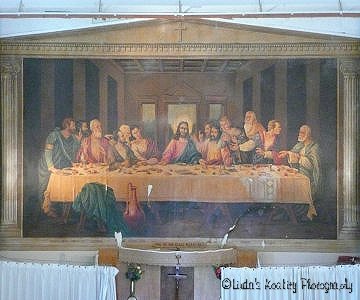
Inside, a few inmates prepared for a service. The highlight of the chapel is a 12’x21’ mural painted by convict, Ralph Pekor (often misspelled as “Pecor.”) in 1938, of DaVinci’s “Last Supper.” Before serving time for manslaughter, Pekor was an illustrator and set designer in Hollywood. The mural is stunning. A re-creation worthy of awe and admiration. If you didn’t know better, you’d think it was the original, that is, except for Pekor’s depiction of the different faces in the painting. They were said to be Pekor’s friends and fellow murderers or perhaps even prison staff. Pekor painted 12 other murals, but this is the only one remaining. Unfortunately, it is beginning to show its age prompting prison officials to try to come up with a way to safely preserve it.
We left the chapel and entered through a chain-link area where dozens of inmates were lined up, waiting to be let out into the yard. The Lieutenant was stopped by an inmate who had a concern. We stood there, waiting for this conversation to end, surrounded by prisoners. It was unnerving to say the least. However, throughout the tour, the inmates remained polite and we never heard them say anything to us.

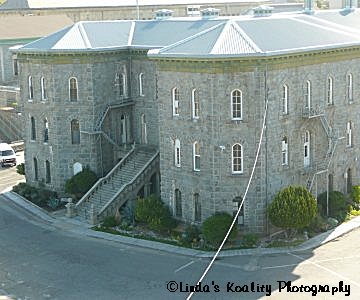
Lt. Baker escorted us though another gate and away from anymore prisoners. The tour was coming to an end. The 2 ½ hours flew by, although my tour companion may disagree. We walked by the old Officers and Guards building that was the original entrance to the prison and is currently being renovated.
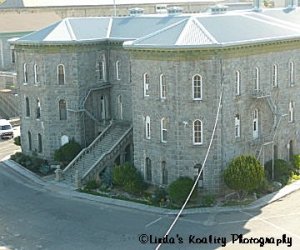
Nearby is Tower 13, once housing cells in the dungeon, now sporting only a ladder to the top where a guard is stationed. Some staff say it’s the one place on the property where they feel uncomfortable in, as if it’s inhabited with bygone prisoners.

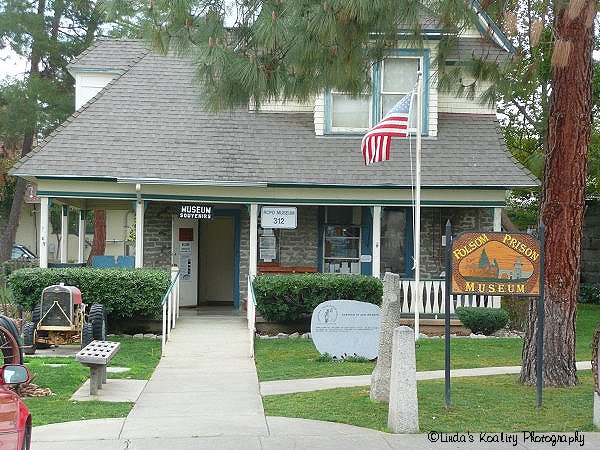
As the tour concluded back at the Entrance Gate, we were exhausted; physically and mentally. Of course, the experience wasn’t over. Just outside the prison entrance is the Folsom Prison Museum, run by the Retired Correctional Peace Officers (RCPO).

The curator, Jim Brown, put in 32 years at the prison and is author of Folsom Prison, part of the Images of America series.
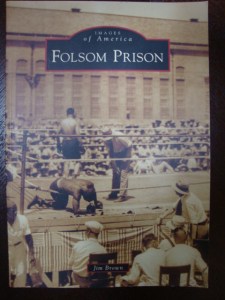
I also had the pleasure of meeting Dennis Sexton, who retired after 31 years of service at Folsom and Julie Davis, who was one of the first women guards at the prison. She spent 27 years and two pregnancies as a guard. Unbelievable.
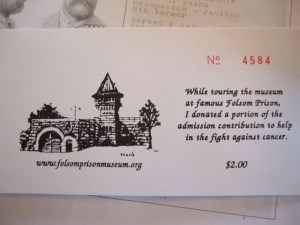
The museum is a non-profit organization that donates much of their proceeds to the American Cancer Society, Fisher House and Make-A-Wish programs. We had the incredible opportunity to sit down with these wonderful individuals and “talk shop.” I do hope they each write their memoirs because they have stories to tell. It was an unexpected treat to sit down and talk with them; I could have stayed there all day.

Unfortunately, we had to hit the road, but not before making new friends. They have generously offered to help me with any research I may need. Please take the time to check out the museum’s website and learn about the brave and wonderful people who are truly dedicated to preserving Folsom’s rich and fascinating history, one artifact at a time. You can tell that they love what they do and aren’t in it for anything other than wanting to share Folsom’s history and help those in the process.

The journey eventually had to come to an end, but after being away from my son and husband for 2 weeks, I was ready to return home. I think I am finally seeing the light at the end of this over-2-year tunnel and I plan to have a first draft done by this summer. In the meantime, a book proposal is completed for review.

If you are ever in the area, I recommend taking a tour of this 130-year-old landmark and visit the museum. And remember ladies, no under wire bras.