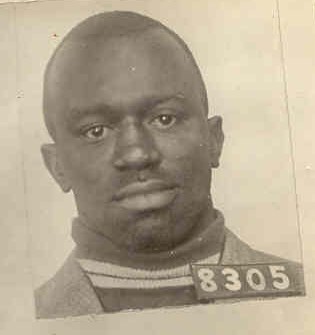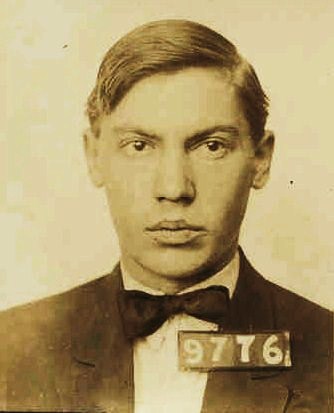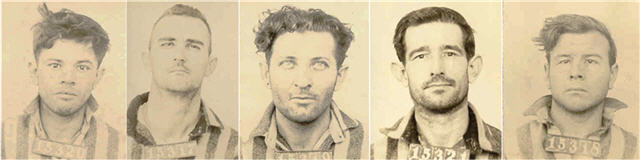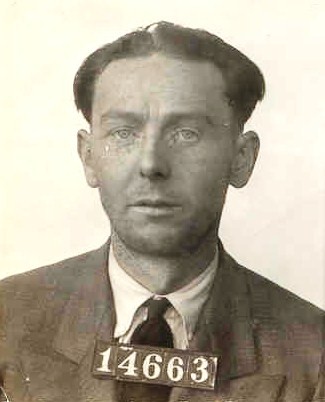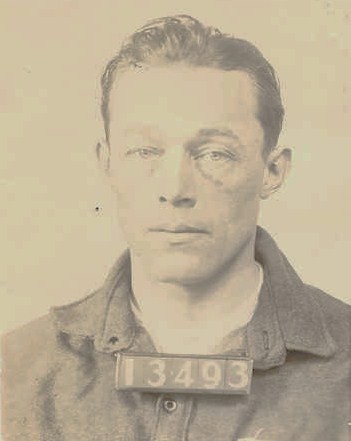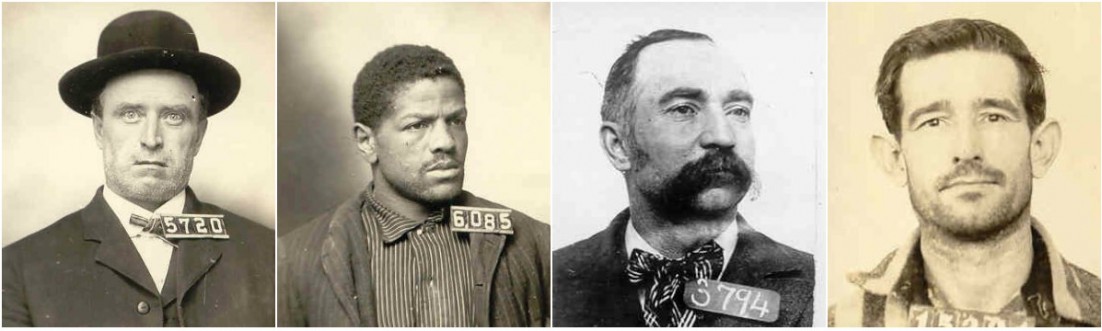
Folsom's 93

The Lives and Crimes of Folsom Prison's Executed Men


3 Comments

A Creative Escape Attempt

Many considered Folsom prison to be the “end of the line.” For some, that weighed heavily on their minds.

The formidable, gray granite walls and dark cramped cells did nothing for a prisoner’s morale. The prison was far from inviting, but would gladly swallow inmates up. Convicts spent much of their idle time formulating plots to escape: hiding in dark corners or under floorboards, taking prison officials hostage, or simply sneaking away from the yard. Folsom’s history is littered with tales of escapes, some successful, others not.

Prison authorities were well-aware of this and considered it when selecting a locale for the penitentiary. They chose the area based on several components: the rich granite deposits, the  proximity of the American River, and the harsh surrounding terrain. Inmates saw these as inconveniences. On top of that, sentinel guards stood watch in towers holding gatling guns, trained to spot (and shoot) a fleeing inmate.

Folsom inmates were surrounded by reasons to not escape, yet it didn’t stop men from trying.

Carl F. Reese and a companion robbed a California theater in 1930, making off with nearly $4000. Captured in Waco, Texas, Reese returned to California to face trial. He failed to break from the county jail after cutting a hole through the brick of his cell using a sharpened file. Perhaps he knew escaping from Folsom prison wouldn’t be an easy task.

Nevertheless, he gave it the old college try.

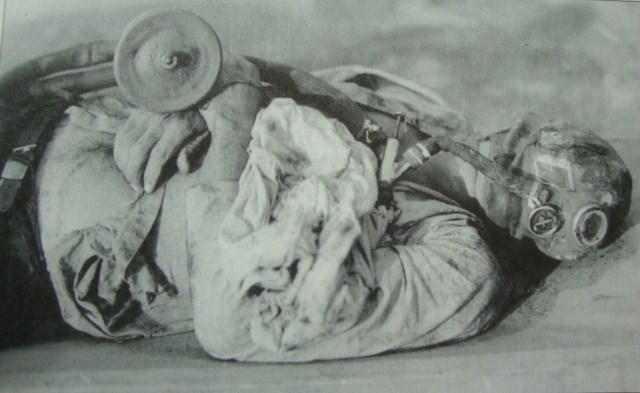
In September of 1932, guards reported Reese missing after he didn’t return from his work in the quarry. Searchers found a hole cut in the wire fence near the powerhouse, by the canal. Guards discovered Reese’s body on the bottom of the canal, his shoes weighed down with iron bars.
Image

Using a rubber football bladder, Reese contrived a sort of diving helmet, complete with a glass eye piece. A rubber tube inserted into the helmet acted as a valve to provide air which was then attached to a tin can so it could float above water. Reese also fashioned an air pump out of a bicycle pump. He then used iron bars to weigh himself down, with the intention of walking along the bottom of the canal to freedom. Warden Court Smith surmised that the valve failed to work, therefore, allowing water to pour into the convict’s helmet. Unable to swim to the top due to the heavy weights in his shoes, Reese drowned.

Considering the amount of items used, it could be assumed that Reese’s escape plot began to take shape the moment he stepped into the prison, collecting the parts and tools to construct his makeshift scuba suit. Officials found a second helmet on the edge of the canal, apparently abandoned by a companion who witnessed the suit’s inventor drown. Probably a wise decision.


2 Comments

Art-Inspired Writing

Earlier this week, I ran a workshop at the Northern Colorado Writers on how art can help inspire a writer, whether it’s a story idea, character sketch, poem, or flash fiction. I grew up with a love for writing and art and found myself as an art major in college. I also owned and operated a greeting card company for ten years. You could say that I’m trying to make the most of the right side of my brain and I hope to someday get back to a children’s book that I’ve written and illustrated.

Monday’s workshop featured the artwork of Jim Fronapfel, local Fort Collins artist who works mainly in pastels. As the Visual Designer at the NCW, I get the amazing job of finding local artists to display their work in our studio. The moment I saw Jim’s work, I knew it’d be perfect for this workshop. He has this uncanny ability to capture something about his subjects, something that just tells a story. Myself and each of the participants picked one of Jim’s pieces of artwork, and we wrote for 20 minutes. Brave attendees then read what they wrote, followed by Jim describing his own inspiration behind the canvas.

So how do you spot the story in a piece of art?

The Mood. Artists often convey the mood through texture, technique, and color.

  • Texture is the actual surface of the work, or the way the work is represented.Can you see actual texture or is it simulated?
  • Technique shows how a piece of art is created. Does it look quickly drawn?Rough? Or smooth and soft?
  • Color can depict the mood of piece of art. This is often subjective where the same color canmean something different to different viewers. What do the colors say to you?

The Time Period/Setting It may not be obvious what time period the work is depicting. If you can put the subject of the work into a certain setting, such as the Depression, would that evoke a story? Does it help while doing a character sketch?

Find the Genre. Historical fiction? Young adult? Thriller? Poetry? Romance? Horror? Can you see several potential genres in the same picture?

 Online Art Resources for Writers

Art Project by Google:  Explore museums without even leaving your home. Google brings several galleries, including the National Gallery in London and The Metropolitan Museum of Art in New York City to your computer. Like giving you a street view of your neighborhood, Google does the same of the inside of galleries. View the art as if you’re actually sitting in front of it.

 Art Resource: This site allows you to browse through thousands of pieces of art. Type in a subject matter and the results could yield hundreds, if not thousands of story-inspiring art.

Jim Fronapfel’s site, of course! Click on the image under “Other Works” on the right hand side and you’ll be able to view over a 100 different works of Jim’s that are sure to inspire an essay, poem, character, or story.

While we wrote, Jim spent the time creating a masterpiece on an Etch-A-Sketch:

All I’d be able to do is a really cool set of stairs . . .

DO YOU USE ART AS A MUSE?


1 Comment

Any Last Requests?

Image—Folsom Death House, circa 1933

“Any final requests?” Some of these men never thought about this until asked the question. Warden James Johnston in 1912 granted most requests (within reason) while refusing those that involved drugs or alcohol, sometimes even tobacco. The condemned inmate also received two final meals: dinner and breakfast. Typically, the dinner came with music from a phonograph that the warden brought in. For many, the night carried on with music, singing, and noshing on a lavish dinner.

27—Edward Delehanty

Number 27, Edward Delehanty asked for pies, cakes, chickens, candies and other delicacies. “Fetch on yo chicken and chocolate cake and bring me a watermelon so big I can hide mah head in it.” Fellow inmates played guitars and banjos while Delehanty danced. That night in 1912, the usually dark and cold Condemned Row brightened with laughter and singing. Delehanty then fell morose and without touching the food, insisted Warden Johnston give it all to the musicians.  As a final contribution Delehanty asked officials to put a record containing William J. Bryan’s speech, “Immortality.”

54—Charles Peevia, alias Charles Gafford

Charles Peevia, Folsom’s 54th execution, dined on pork chops and watermelon.

37—Kosta Kromphold

Kosta Kromhold, Folsom’s 37th execution, hanged for killing a police officer.  He requested to hear the tune, “If I only had a thousand Lives to Live.”

28—Jacob Oppenheimer

Jake Oppenehimer, number 28, spent his last night smoking cigars and listening to his favorite music. “Play lively tunes,” he ordered, particularly favoring John Philip Souse’s band selections. “Taps” ended the concert at nine o’clock and the doomed man fell asleep with a handkerchief over his face. He decided to forgo his last breakfast, as his stomach ached from the rich foods and candies outside supporters sent to his cell the day before. The usual breakfast consisted of pancakes, ham, eggs, and coffee. Although bacon, omelets, and toast were often served in addition to the usual fare.


61—Anthony Brown, 63—Walter Burke, 65—James Gleason, 64—James Gregg, 62—Roy Stokes

In 1930, when Walter Burke and James Gregg, two of the five men executed for their role in the Thanksgiving Day Riot of 1927, learned they could request anything for their final dinner, they ordered an elaborate feast. Burke called for chicken croquettes and Gregg for bacon and eggs. In addition, their riot cohorts, Anthony Brown, James Gleason, and Roy Stokes savored sweet potatoes, baked squash, bread and butter, peach pie and homemade donuts and coffee. In the morning, they enjoyed a hearty breakfast of cereal, fried eggs, fried potatoes, corn griddle cakes and maple syrup, peaches, hot muffins, buttered toast and, coffee.

57—Willard Shannon

Number 57, Willard Shannon had toast, strawberries and chocolate. A borrowed phonograph played “The Sidewalks of New York,” over and over again in Shannon’s cell while he sat smoking nervously and listening, waiting for the death hour.

2—Ivan Kovalev

There were some who couldn’t stomach the idea of eating just before dying, many refusing to partake in the privilege. Ivan Kovalev, executed in 1896, declined his last meal. The warden then offered him whiskey. He opted for a glass of milk.

69—Wilbur McCabe

Quite possibly, one of the strangest requests came from Wilbur McCabe, number 69 in 1931, who asked for a head of lettuce. He of course, received it.

55—Ray Arnold

Although not all requests involved food and entertainment. In 1927, Ray Arnold became the 55th execution after a jury found him guilty of complicity. Stoutly declaring his innocence, he stood on the scaffold, legs and arms bound, and made his final request:

“I am innocent. Please cut this noose into 13 pieces and give one to each juror and the judge who convicted me.”

The State Board of Prison Directors refused to honor his request.

WHAT WOULD YOUR LAST REQUESTS BE?


Leave a comment

Do You Know Your Prison Lingo?

I hope not. However, should you find yourself in the hoosegow, refer to this list of early prison lingo. I imagine the list has grown and changed since the 1920s, but at least you won’t look appear too much like a fish . . .


Fish: newcomer at the prison

Shive: knife, dirk

Coppers: credits for good behavior. Full credits shortened a 50 year term to 29 and 10 months.

Harness Bull: uniformed policemen

A Snitch: Person who tell tales to guards

Stool pigeon: a convict spy

Butcher: surgeon

Hole/Down Below: Dungeon

Croak: to kill

Stiff: corpse, a fellow convict

Pill: shot of dope

Bug house: insane asylum/hospital

Screw: insane inmate

Snowbird: Morphine user. Morphine was called “snow”

Gun: hypodermic needle

Jacket: strait jacket

Hooks: handcuffing a man by the wrists and hoisting him up so only his toes only touch the floor.

Jolt: a term in jail

Sleep: a one year term

Prowler: burglar

Sneaks: rubber soled shoes

Lump: lunch

Blowin’ a Pete: blowing a safe

A grand: $1000 (this may seem obvious now, but it originated in the slammer)

At the Springs: in the strait jacket

Straighten the screws: treat the mentally ill


Leave a comment

Organizing the Research

I learned early on that when undertaking such a big project involving 93 different people pertaining to a 130-year old prison, that organization is critical. Luckily, I have an affinity for organizing stuff. Give me a label maker and within hours, I’ll have your life (and its contents) conveniently identified with neat, white labels.

I have two large file boxes (check out those handy labels) filled with 93 dead guys. Or, shall I say, their info. Everything relating to the inmate goes into the file, including feedback from my critique group when I submit a story. It all goes in there.

These books are invaluable to my research. The one I’m currently tackling is Prison Life is Different, by James A. Johnson, one-time warden of Folsom prison.

And as you can see, I keep my house fully stocked with Post-it notes:

Throughout my research, I have found that most information is consistent, but there are times when I discover mistakes and errors in books. First, I raise an eyebrow, then I consult my notes and sources, then I yell “Ah-ha!” and end it by acting smug for the rest of the day. C’mon, who doesn’t like being right?

This process can also be frustrating. I run into dead ends and brick walls and answers to my questions aren’t easily found at times. I’m lucky to have the helpful staff (on speed dial) at the Folsom Prison Museum to aid in my research.

I have close to a million words (I’m not kidding) of notes and everyday, little by little, those words turn into pages of a book. I’m getting there—with the help of my label maker and Post-it notes.


Leave a comment

Toys Made by Prisoners: Would You Buy?

“Oh, look, Susie! Your dolly even comes with her own mug shot and fingerprinting kit!”

Perhaps like the American Girl dolls, prison-made ones would come with names like “Back Alley” Sally, Machine Gun Mary or Rachel the Rat. (Folsom’s Condemned Row came to be known as the “back alley”).

image

Ok, that’s a bit of an exaggeration, but in 1921, Folsom prison warden Court Smith, proposed opening a toyshop at the prison. Smith and San Quentin’s warden, James Johnston, both recommended the men would receive compensation for their work and hopefully learn skills to find legitimate jobs once released from the clink.

The idea creates quite a picture in one’s mind: the calloused, scarred hands of hardened criminals making dolls and stuffed animals for children; bolts of floral-patterned fabric lining the gray granite walls and colorful paper decorations hanging from the ceiling.

Surely, there would be jovial Christmas tunes playing in the background. Instead of letters to the North Pole, children everywhere would address their holiday wish list to Repressa, California.

At Folsom, inmates were used to working. They basically built the prison themselves, as well  as all later additions using the granite quarried from the surrounding area. For a brief time, Folsom housed a furniture shop and at San Quentin, scores of inmates produced jute mill bags. Using all convict labor, the toy factory would have been built using stone from the quarry and employed prison stonemasons, machinists, and eventually, manufacturers.

The proposed factory failed to receive approval from Legislation, who felt there would have been too much competition from Germany and other foreign countries to warrant the idea. So unfortunately, finding a rare Folsom “Sandy The Squealer” doll with a anchor tattoo stitched into her arm, isn’t going to show up at the Folsom Prison Museum.

WHAT DO YOU THINK OF PRISONERS MAKING TOYS?


Leave a comment

The “Crime Germs”

In 1921, George C. Henderson, editor of the Oakland Tribune in California wrote an article entitled, Queer Kinks in Convicts’ Brains: Train Robbers Are Prison Heros;[sic] Poisoners, Murderers Spurned; “Blood Hunger” May Be a Disease

“Criminals think their criminality is a talent; psychoanalysts think it is a disease; police officers say it’s just natural meanness; prison authorities say it is a result of economic and social conditions, while the general public—doesn’t think.”

Henderson posed the question that perhaps a “crime germ” infected criminals that “twists man’s brain into queer kinks and causes him to think on the bias . . .” Many of us wonder what these “kinks” are and if they even exist. Henderson asked, “Is this strange quality of beastly perversion inherent in some individuals?” Henderson did have his theories and he also discussed how different criminals ranked on the “respect chart” at Folsom and San Quentin.

Brutal murderers: Henderson proposed there is the possibility of a rogue germ running rampant in the brain of a murderer. His other theories included:

  • Blood Hunger: Like a disease, this is much like a drug habit. The first kill is always the hardest, but it almost always yields a thirst for more. The addiction takes hold and the one-time killer now murders wantonly and even joyfully.
  • All in the Family: The apple may not fall far from the tree. This made itself apparent in the case of Lloyd Majors and his two sons. The elder Majors hanged for a brutal murder in the late 1800s, when his sons were babies. As the boys grew, they too, became murderous bandits.

These types of vicious murderers and rapists were regarded with more contempt among “respectable” highwaymen, swindlers, con men and bad check artists. In Henderson’s eyes, the poisoner was the “most despicable and disgusting of all assassins,” (aside from the degenerate murderer). This type of murderer typically attacks family members for money or revenge. Fellow prisoners hated these men because of their “sneaky” crimes.  “The more courageous “cold steel” killers look upon him with disgust while the highwaymen spit upon him in the yard. Some weird, savage, beastly strain must run in the blood of such a one.”

Lure of the Desperado: Henderson opined that train bandits and stage coach robbers suffered from the “love of adventure” kink. Many of these criminals started out as daring highwaymen for the thrill and excitement; murder, being the last thing on their minds. However, after having to shoot to save themselves from capture they gradually turn into killers. “There have been many instances where the highway robber had displayed chivalry and generosity. The same energy directed into legitimate channels would undoubtedly make the courageous thug a leading citizen,” wrote Henderson.

George Sontag, famous murdering desperado of  the 1880s who participated in Folsom’s first mass escape attempt in 1893, only to be wounded by gun fire from guards.

Gun Toters: These men were considered heroes among the prison crowd. “. . . young, fearless, hardy fellows who went out armed with revolvers and did not hesitate to shoot when the command of “hands up” was not obeyed.”

Embezzlers and Forgers were shunned. “Fine threads of gold and silver bind the “kink” in the embezzler’s brain.” Fellow prisoners shunned this type of criminal for their lack of courage to wield a gun or engage their victim in a battle.

Burglars: This type of criminal earned little respect among his prison peers, “because it requires much less courage to burglarize a place than it does to hold up a man at the point of a gun on the street.” Burglars ranged from the casual tramp to the accomplished crook or drug addict.

Henderson listed what he felt constituted “crime germs”: Laziness, Greed, Ignorance, Uncleanliness, Selfishness, Drunkenness, Depravity, Idleness, False Pride, Lust, Envy, and Drug Addiction.

“These are the “germs” whose virulent poison may send a son or daughter to prison or to the gallows. They begin as harmless little bugs. In many cases they do not produce tragic results. And then again the bite may be deadly.”

His “anti-toxins” consisted of Industry, Generosity, Knowledge, Cleanliness, Unselfishness, Sobriety, Purity, Employment, Humility, Spirituality, Fellowship, and Character.

In 1921, Folsom prison housed each of the above-described criminals. Today, you won’t find the highway men or stage coach robbers at the 130 year old prison. Much different classes make up the prison now, particularly gang factions that include the Mexican Mafia, the Nuestra Familia, and the Black Guerrilla Family. Two white gangs also contribute to the mayhem: the Aryan Brotherhood and Nazi Low Riders. Oh, and did I mention the Chinese gangs?


2 Comments

An Extraordinary Find

Everyone in Folsom’s 93 is dead. That makes it difficult to score an interview with them, which would be very helpful. I’m forced to rely upon items they’ve left behind. Letters, newspaper articles, transcripts and other legal documents are my means of “getting the story.” I’ve also been lucky enough to find descendants of these men, their victims, or former Folsom employees, who have shared some stories with me. When early Folsom staff retired or resigned, they often took with them items; keepsakes from the prison. At the time, they seemed nothing more than a souvenir, but as years went by and they passed away, the items remained stored away and forgotten. Julie Davis of the Folsom Prison Museum said that Folsom antiquities have turned up at garage sales—sold to someone for just a few dollars. If we’re lucky, the buyer sees the  significance of the item and brings it to the museum.

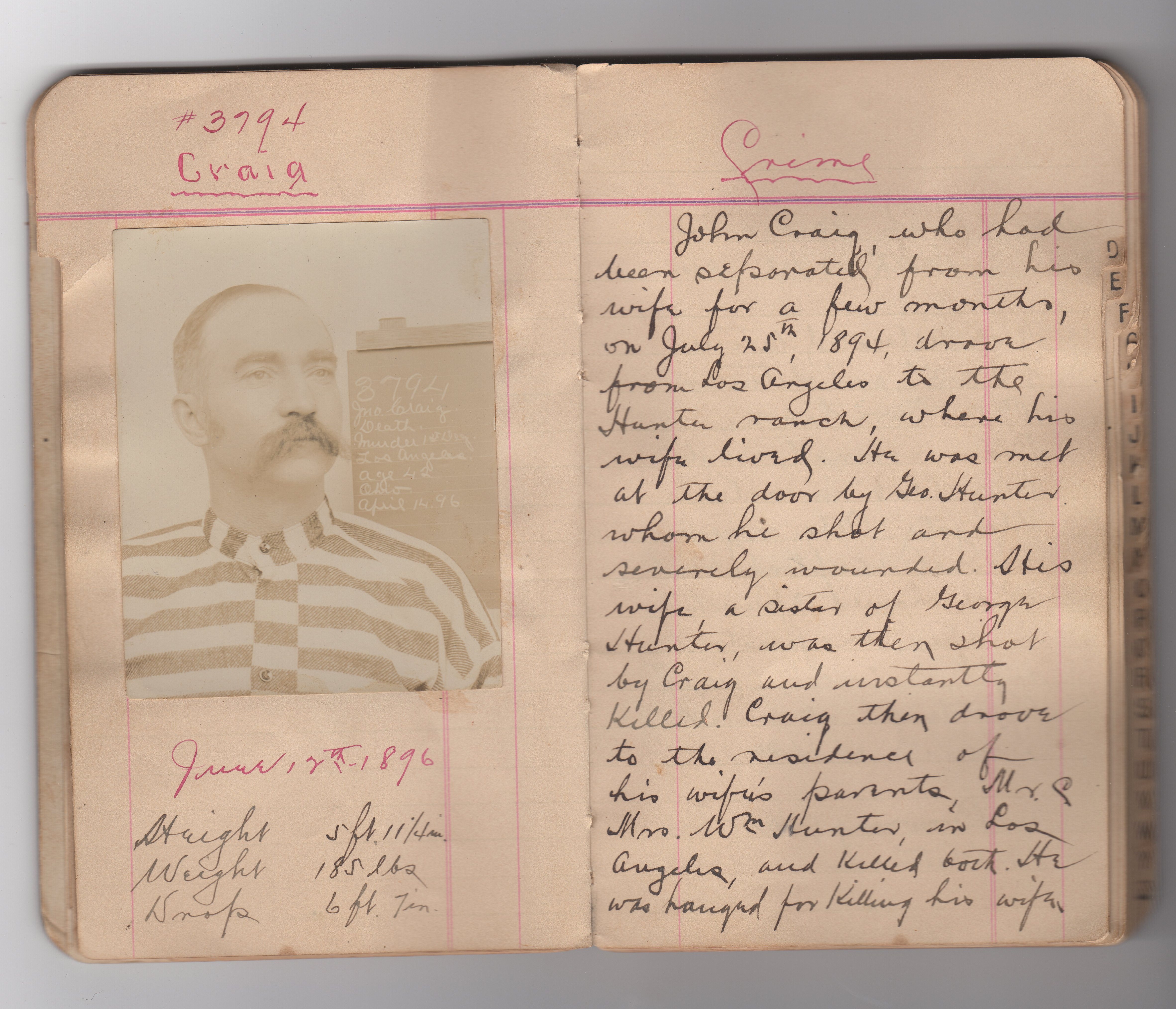
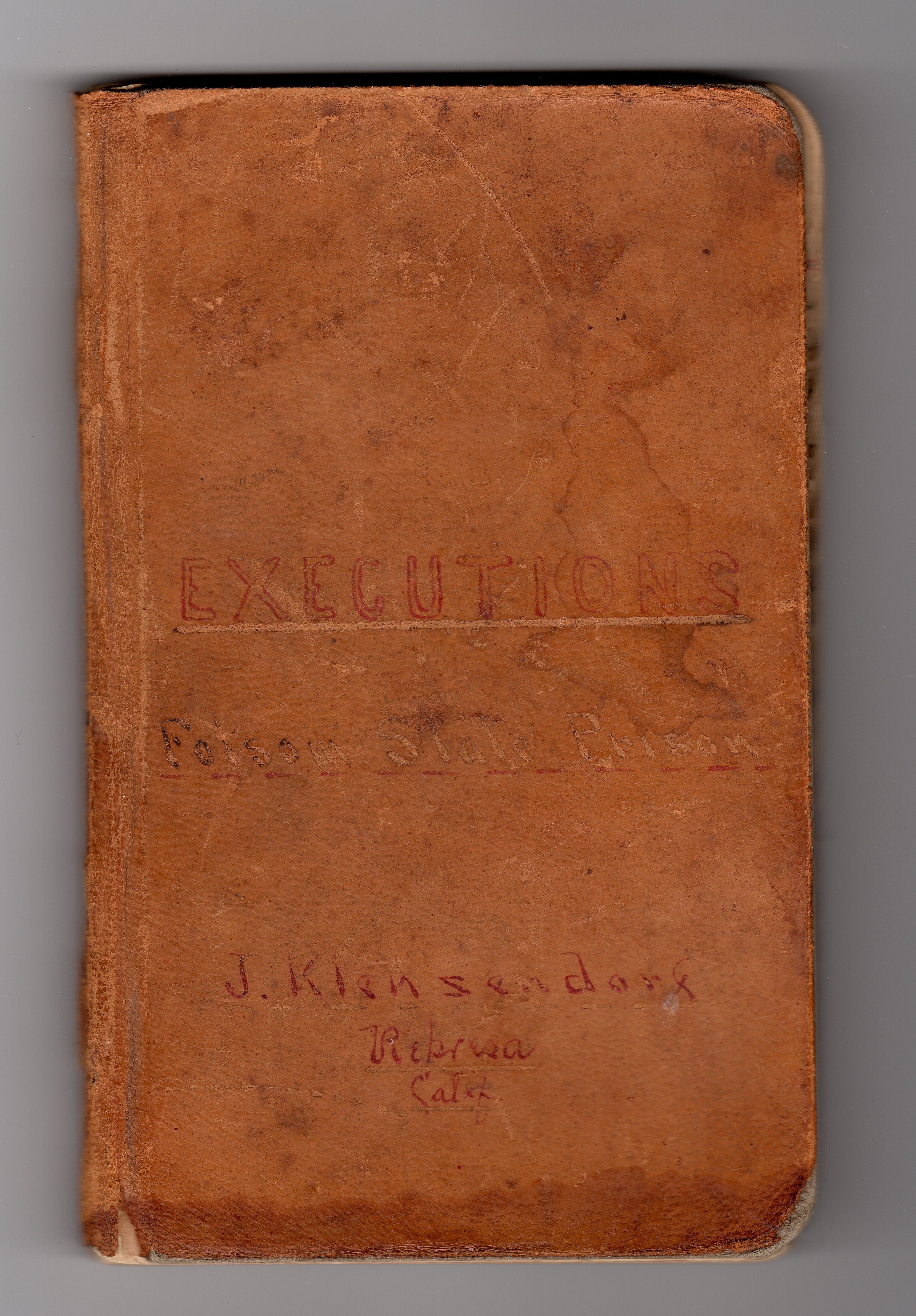
Imagine my delight when a gentleman named John Ackerman emailed me with his extraordinary find: A small book documenting the first 14 executions at Folsom prison. His Great-Grandfather, John Klenzendorf served as a Folsom prison guard at the turn of the 20th century. In 1903, Klenzendorf found himself thrust into the middle of a prison break where 13 inmates escaped and only 6 were recaptured. Two of the six hanged for their roles in the break that left a prison guard dead. Inmates took Klenzendorf, the warden, and other guards hostage as they fled the prison. The escapees let Klenzendorf go the following day, one of the last hostages to be released.

It appears Klenzendorf kept his own journal of the executions while he served as a guard. This book is actually an address book. If you look closely at the top picture, you’ll see the alphabetical tabs on the right side. From 1895 to 1902, Klenzendorf documented the executions by listing their name, height, length of the rope, and a brief story of the man’s crime. The top picture is of John Craig, Folsom’s 3rd execution, yet this journal lists him as number four. I find it very peculiar that Klenzendorf wrote the wrong date in his book, as I can only guess he witnessed the execution. My theory is that Paulo Kamaunu’s (#4) original execution date got recorded, which did come before Craig’s. Kamaunu’s date changed after he lost his appeal.

I don’t believe it’s unusual guards kept these kinds of personal documents. Executions during this time were still a fairly new practice in 1902 for Folsom prison, even though men had been the guest of honor at these “neck-tie parties” in California since 1851.

I’d love to get my hands on this book, but I’ll have to settle with admiring it from afar since it resides a couple thousand miles from me. I’d like to thank John for contacting me and supplying the wonderful photos of it. John will be meeting with Jim Brown, curator of the Folsom Prison Museum to determine more of the history behind the journal. I think I’m just as anxious as John to hear what he learns. It’s always great to encounter people who appreciate the historical value of these items and want to continue to preserve it. Thanks to John and Jim, this piece of history will be saved.


2 Comments

Would You Like a Hanging with Your Last Meal?

Hanging or lethal injection?

I’m sure you’re rarely asked that, but if you’re a condemned prisoner in New Hampshire or Washington State, you might be given that choice. (In Utah, an inmate can opt to go before a firing squad if lethal injection cannot be done).

Countries around the world still consider hanging their primary method of execution, but in the United States, lethal injection rules the prison roost. California outlawed hanging in 1937, replacing it with the gas chamber at San Quentin. Other states abandoned this method due to botched hangings, such as when Eva Dugan ended up decapitated in 1930 in Arizona. The idea of choosing how to die may seem like an absurd notion, but for New Hampshire’s and Washington State’s death row inmates, it’s a decision they face.

Image

Hanging

Length matters. In order to facilitate a “perfect” execution on the gallows,  the weight of the prisoner is taken to determine the proper length of the “drop” through the trap door. Decapitation can result from a rope that it too long. If it’s too short, death (by strangulation) can take up to 45 minutes to occur. Today, sandbags are used for a test run the day before the execution. Much importance is place upon the rope, which should be 3/4-inch to 1 1/4-inch in diameter, boiled, and stretched to eliminate recoiling. At Folsom, executioners soaked the Italian hemp for 24 hours, then stretched it for a number of months before the hanging. Records at Folsom indicate that all 93 men died from “instant broken necks.” Upon arriving at the gallows, the prisoner’s hands and legs are bound and a black cap is placed over their head. The executioner secures the noose around the inmate’s neck and at the warden’s signal, the trap is dropped. Folsom’s noose featured a “submental knot,”  which when placed against the back of the neck, ensured the mostdamage to the vertebrae. Ideally, it brought immediate unconsciousness and death within roughly 9-15 minutes.

Image

Lethal Injection

The United States saw it’s first lethal injection in Texas in 1982. Since then, there have been nearly 1100 executions in the U.S. In fact, tomorrow (April 5th), two lethal injections are scheduled to take place; one in Texas and one in Arizona. So what could go wrong? Plenty. Botched executions happen more often that you might think. The Death Penalty Information Center lists only 31 most seriously botched cases of lethal injection since 1982.

Strapped to a gurney, the condemned prisoner is injected with a harmless saline solution, then as witnesses watch, he or she is given an anesthetic to put them to sleep. Pavulon or pancuronium bromide, is then administered to paralyze the entire muscle system and stop the inmate’s breathing. The piece de resistance is potassium chloride to stop the heart. Botched executions can result from a number of reasons. Oftentimes, they occur due to technician error. Because of medical ethics, doctors are not allowed to administer the lethal drugs. Inexperienced technicians sometimes inject the poison into the muscle, missing the vein. In 1990, an inmate suffered excruciating pain when the inserted needle pointed at his hand, and not his heart. Another culprit of a botched job is a history of intravenous drug use by the inmate. Damaged veins can be uncooperative, causing long delays in the execution.  Some of these condemned men actually helped their executioner find a usable vein. Another reason, are prisoners having unforeseen reactions to the drugs causing painful spasms.  For some, death took up to an hour and thirty minutes to occur.

Every form of legal execution in the U.S. (gas chamber, electrocution, lethal injection, hanging, and firing squad) sports a history of mistakes. I imagine however, the condemned prisoner isn’t necessarily thinking about the potential mistakes in his execution, but the mistake that ultimately led him to this decision: Hanging or lethal injection?

The Modesto Evening News said of Folsom’s 45th execution:

“Kels did not die hard, the guards said who had seen men die thus. To the novices in the death chamber, it seemed that he did die hard—terribly hard. The slightly twitching shoulders, the swaying legs that writhes at first—it must be some such horrible picture that Alex Kels carried in his mind of the death of Ed Meservey, his victim.”

Source for some of the information contained in this post: Folsom Prison Museum and Death Penalty Information Center


Leave a comment

Passive Voice: It’s Not Just a Misdemeanor Anymore

It’s a felony, but I’ll get to that.

Twenty-seven judged entries are in the mail. I did my best to crush the dreams of several writers.  Mmuuhahah! (evil sinister laugh) Okay, of course I hope I didn’t do that. In fact, I like to think I offered constructive criticism while pointing out things they did well.

As writers, I believe we need to learn from everything we read and admit (even if it’s only to ourselves) what our shortcomings are when it comes to our own writing. Believe me, I’m no grammar maven. In fact, I’ve probably recently submitted less-than-stellar work containing errors and rogue commas. (I am after all, a recovering Comma Fairy who used to sprinkle my work with magic comma dust, letting them fall where they may).

Judging these entries for the Pacific Northwest Writers Conference proved to be a fantastic learning experience for me. It made me a better writer (at least that’s what I keep telling myself). So here’s what I (think) I learned:

Writing Mechanics are a lost art—apparently. Of the 10 elements to address in each entry, I’d say writers struggled the most in the area of mechanics (sentence structure, spelling, punctuation, formatting, verb tense consistency, and typos). My biggest pet peeve: Passive Voice. Sure, “was” has its place:

“It was a dark and stormy night . . .”   “T’was the night before Christmas . . .”   “It was the best of times, it was the worst . . .” (Oh, geez. There’s two of them)!

Don’t be a victim of passive language. Protect yourself with active verbs.

For many of the entries, I found it extremely difficult to see the story behind the constant ill-formatting, typos, and improper punctuation. In fact, it appeared many entrants devoted very little time and effort to the mechanics of  writing by using strange and inconsistent dashes, ellipses, and indentations. (If you’re going to misuse them, at least misuse them consistently). For some, I suggested a Comma Cleanse. Guaranteed good karma for the writers’ soul. One person misspelled their main character’s name three times! Another left a blank page in the middle of the submission and another page printed crooked, going off the edge of the paper.

Poor mechanics can kill an otherwise good submission and distract the reader from the story. So don’t rely on your fabulous story to save your butt.  After you think you’ve finished typing up your submission, take 1-2 days and focus ONLY on mechanics. Give it to someone else with instructions to only look for grammatical errors. Doing that can save your butt.

Other stuff I learned:

  • When submitting a one-page synopsis, use the whole page! Also, don’t assume the judge reads the synopsis first by thinking, “Hey, they’ll get it when they read the synopsis . . .” Uh, no. I read the synopses last because I wanted to have the same experience their target reader would have. Make the tone, mood, time, and setting clear, as well as who the central character is.
  • I suggest never ending your submission with half a sentence. Just because you have a page limit, doesn’t mean you print out just those pages and call it good. Tidy it up; don’t leave a sentence hanging.
  • Thinking about writing a 13-page prologue? Please don’t.

And last . . .

  • I’m not perfect! I know, hard to believe, huh? I learned it’s easier to point out flaws in others writer’s work than in my own. We can all be like that to a point, right? It forced me to see my own writing flaws and hopefully, correct them. Hmmm . . . I think I might be getting the hang of this writing thing.