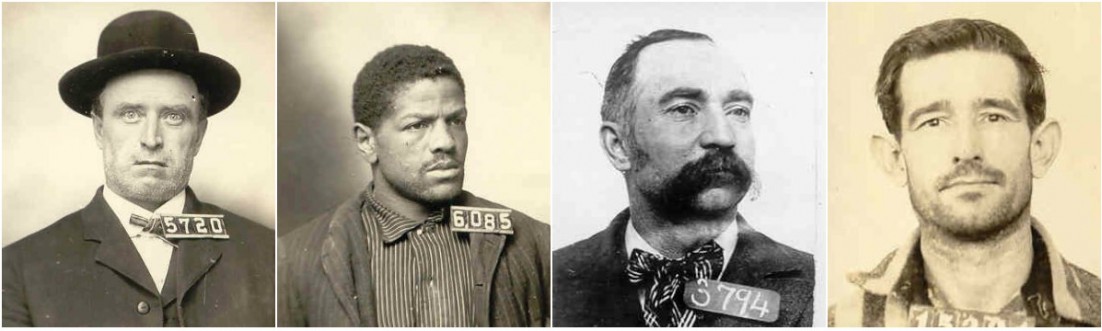
Folsom's 93

The Lives and Crimes of Folsom Prison's Executed Men


1 Comment

Folsom Inmates Making Good

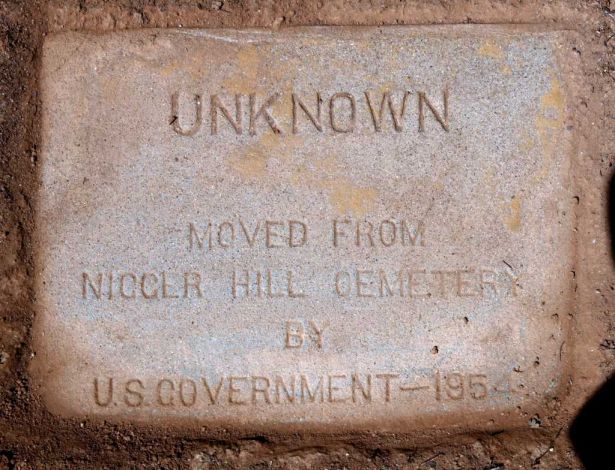
When the U.S. Army Corps of Engineers relocated thirty-six Gold Rush-era graves in 1954 to make way for the Folsom Dam, they added a racial slur to the headstones. Because the graves originally resided at an area a few miles from the Dam known as Negro Hill, the N-word was chiseled on the headstones.

Photo

At the cost of $18,000, the new grave markers will read: “Unknown. Moved from Negro Hill Cemetery by U.S. Government, 1954.” California prison inmates, participating in a work program, are helping to make right the wrong. California Prison Industry Authority spokesman, Eric Reslock said, “We are providing inmate labor and construction materials to rectify these historically inaccurate and offensive headstones.”

Photo

Two of the headstones were sent to the California State Archives in Sacramento, and the other 34 are being held by officials of El Dorado County.


2 Comments

Get Organized with a Writer Planner!

Every writer could use a planner to help them stay on track. My friend, Kerrie Flanagan, director of the Northern Colorado Writers, publishes a writing planner every year. She asked me to do the illustrations for the 2012 version and I couldn’t be more thrilled with this project. In addition to writing, art is a passion of mine—even majored in it. (Word of advice for you youngins’: don’t major in fine arts. It sounds great now, but wait until you need to go to work in the real world . . .)

So I’m excited to be tapping into more of my right brain by returning to illustration. The planner is especially designed for writers to help keep them organized and on-task. Writing is a journey, thus, the theme of this planner. Each illustration portrays a different literary journey, such as The Road Not Taken, Alice in Wonderland, and the Odyssey, to name a few.

The planner will be available November 15th, but you can pre-order one for $13.95, $18, with shipping.

Around the World in 80 Days

If you’d like to pre-order your planner (and ones for your writing friends . . . ) visit Northern Colorado Writers and order online. Thanks in advance for your support!


Leave a comment

Writing Short and Compelling Nonfiction

The other night I attended a lecture by author and journalist, Greg Campbell. Greg is the author of Blood Diamonds, Flawless, and Road to Kosovo. I first met Greg earlier this year at the Northern Colorado Writers Conference where he presented a workshop on writing narrative nonfiction. Since then, I have tried to attend every one of his classes or lectures because he’s such a master of nonfiction. For this particular lecture, Greg focused on a journalistic approach to short nonfiction, having been in that field for many years. Greg’s book-length narrative nonfiction is certainly something to marvel at—he knows what he’s doing. Flawless was probably one of my favorite nonfiction books I’ve read in a long time—it’s fantastic.

Tuesday night’s lecture focused on writing short, yet compelling nonfiction. To define short, we’re talking 800 to 1500 words; 2500 at the most. Anything shorter, it’s tough to get too “compelling,” but nonfiction at that length, is typically newspaper articles—so you need just enough room for the facts. It could pose a challenge for me considering many of the stories in my book will have to be between 300 and 700 words. I’m up for the challenge.

The following are pieces of sage advice from Mr. Campbell. (I paraphrased) Take notes.

Know your audience. This isn’t just your readership. When it comes to short nonfiction, knowing an editor’s specific style is the first thing to consider. For example, USA Today and The New Yorker may have the same readers, but the types of work they publish is very different. Know your editor first.

Know your story. What is your story? And what makes it important? How does it differ from other published stories on the same subject?

Become a storyteller. Write your story in a letter to someone who knows you well. Tell them your story how you would in a conversation. The recipient will be able to tell you where it doesn’t sound like you, where the holes are, etc.

It comes down to voice. You can either put yourself in the story or not. You have to decide if it’s necessary. Can the story and its characters speak for themselves? If you have a message, trust your reader to get it without beating them over the head with it—it’s distracting.

Responsibility to get it right. It’s a no-brainer; get your facts correct. And forget being “objective.” Be fair and accurate. Greg stresses the importance of knowing enough about your topic to defend it, because you may just have to.

Blog a lot. It’s great practice. It’s that simple.

Greg Campbell’s Top 8 Rules for writing short and compelling nonfiction

8. Jump in with both feet; don’t go wading out. Open with a scene from the middle of the story. Drawing the reader in may require starting somewhere other than the beginning.

7. Use really good quotes—and lots of them. They create mile markers in your story, and what’s not compelling about a good quote?

6. Be declarative when you write. Take out the “he said” and replace it with “he thought.” Taking out the attributes puts the reader into the heads of the characters.

5. Pay attention to word selection. Pick words you actually use; that are colloquial, conversational, the way you would speak. Avoid jargon and using “favorite” words. Throw in some well-played metaphors and similes.

4. Pay attention to sentence selection. You can be “colorful” but don’t do it randomly. Plot them out and make sure they are a part of your vernacular. They need to settle into the background, not take center stage.

3. The inverted pyramid. So picture an upside down pyramid in your mind. The top third is the newsworthy stuff. The middle are details, and the bottom is background/filler. That’s your typical newspaper article. For a bit longer nonfiction, overlap another inverted pyramid on the bottom third of the first pyramid. That’s where you hit the reader with another surprise. Greg called them “electric shocks.” Add another pyramid. These “shocks” keep your readers interested throughout.

2. Find a way to wrap up the story by bringing the reader back to the beginning. This a common technique good journalists use to remind the reader where they’ve been. It brings them back full-circle and shows them that you constructed it that way instead of writing it willy-nilly.

1. Write with confidence! Greg couldn’t stress this enough. This comes back to knowing your topic inside and out. Complete mastery and clarity of the topic establishes you as an authority on the subject which will give you confidence to write about it. And confidence = compelling.

So there you have it. Check out Greg’s blog and learn about his forthcoming book on medical marijuana, out next spring.


Leave a comment

Book Review: Keep it Real, edited by Lee Gutkind

When it comes to writing, my first love is fiction, so when I took on a nonfiction project, I had no idea where to begin. I knew how I wanted my book to read, but I wasn’t sure how to get there.

As the Chinese proverb says, to know the road ahead, ask those coming back, I turned to the experts, namely Lee Gutkind, a creative nonfiction guru. In Keep it Real, various authors contribute their sage advice in this 161-page book. The chapters follow an ABC format and are laden with examples from published nonfiction. Gutkind covers all the bases with short and concise chapters that give practical advice concerning everything from the legalities of writing nonfiction, to deciding whose story to tell.

One contributor (although a list of authors are named in the beginning, the chapters are not credited) discusses the importance of research and immersing oneself in the subject:

 “By staying close to the informational, journalistic roots of creative nonfiction, by simply hanging out in the world and paying close attention, we may find that a large chunk of that mundane fact collecting and routine research will lead to untold stories and to  places that we, as writers and readers, didn’t know we could go.”

 The purpose behind the book is to teach writers that nonfiction doesn’t have to be a boring narration of facts; there is a place for imagination in nonfiction, in fact, it’s imperative. Gutkind urges writers to become the reader’s “tour guide” by “[leading] a reader on a journey, allowing her to discover parts of the world that she might not normally see.”

 Keep it Real is a great read for memoirists. There are several chapters devoted or pertaining to those who are telling their own stories.

 “A good memoir offers readers a human connection. A good memoir uses life experience, not to go more deeply into the self but to reach out to others. A good memoirist makes connections. A good memoirist’s primary goal is to show us something true about ourselves, about what it means to be human.”

 Keep it Real is an easy to follow, quick read with a plethora of examples to learn from. It opened my eyes to the different ways to effectively approach creative nonfiction (including 14 different point-of-view options)! While the book stresses the importance of writing nonfiction creatively, it also shows how important the writer keep it real.


2 Comments

Every Writer Could Use a Retreat

This weekend I attended the Northern Colorado Writers Retreat at Sylvan Dale Ranch outside Loveland. This is the second year I’ve done the retreat. Last year, I didn’t get as much done since I hadn’t finished my research at that point, but not one to pass up an opportunity to have peace and quiet (even if it was just to get a nap) I went.

This year, having completed my research, I had no excuses. We arrived Friday afternoon, got settled and had a couple of hours to write before our group of 10 gathered to discuss individual writing goals for the weekend. Then we had another couple of hours before dinner. I couldn’t pass up a rather boisterous game of Bananagrams, but after a few rounds, we decided it was time to write again.

From 9-5 on Saturday, we had uninterrupted writing time where the only sounds heard were the rushing river and the taping of keys on the laptop. I emerged from my room to grab a sandwich for lunch in the downstairs common room, then slinked back to continue tapping away. I did make sure I ventured outside to the sunny and peaceful deck to read over some transcripts.

After dinner, I forwent the evening movie of Dead Poets Society and continued to write for another 3-1/2 hours. Each morning I got in about 30 minutes of writing before breakfast.

I want one of these in my backyard

The only misadventure came in the form of a tiny four-legged critter that darted across my floor and turned me into the a shrieking woman standing on the bed, envisioning a thriving community of mice under the bed. Luckily he escaped out into the hall.

I spent 21 hour writing this weekend and met my goal of writing 15 first drafts of the Folsom stories. I’m thrilled I got these done, as I’m sure my publisher would be, too, however I don’t think he’d be happy to hear that the word count on each one is higher than I previously estimated. How I’m going to convince him the word count for Folsom’s 93 needs to be larger, I don’t know, but I’m going to try.

I’m not against begging.

Having this time to write not only resulted in 15 completed stories, but it rejuvenated my writing mojo. I needed to plow through these in order to see the light at the end of the tunnel. Not having the everyday distractions of home, I cranked out several thousand words of text I wouldn’t have otherwise written in that time. Don’t underestimate the power of a writing retreat. Even if it’s only a half an hour away, it’ll be far enough from the daily grind so you can focus on your love of writing.

(Also . . . check out this great post, What is a Writing Vacation? by writer Carol Deminski)


Leave a comment

Was Justice Served?

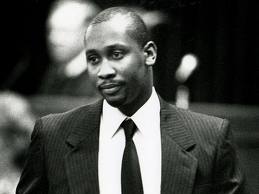
Troy Davis died last night at 11:08 from lethal injection. Strong evidence pointed to another man as the killer of officer Mark MacPhail. There was certainly a tremendous amount of doubt surrounding his conviction and I felt it was tragic that despite this, he was executed. I’m not alone in my opinion; over a million people from across the U.S. and the world supported clemency for Mr. Davis. My heart goes out to both the MacPhail and Davis families, because I think they’re both victims in this case. I don’t know if Davis was innocent, but with such strong doubt of his guilt, capital punishment should not have been considered.

As I’ve mentioned before, I acknowledge the fact that the world has gotten rid of some very heinous individuals, but I can’t help but think about the cost of that; the cost consisting of innocent people. Is the elimination of an S.O.B. worth killing a few wrongly convicted here and there? The Innocence Project has exonerated 273 people, 17 of which served on Death Row. What about those this organization has not been able to save?

In the early 1900s, Jacob Oppenheimer, Folsom’s 28th execution, said in his final speech just before mounting the gallows said,

“Calmly leaving myself of out the question, I want to say that capital punishment is a relic of the barbaric age. It ought not be tolerated. I hope that in every country the time will soon come when it will be abolished . . . I will not be the last to go before this practice is abolished but I will be a martyr to the cause.”

Oppenheimer was just one of many of Folsom’s 93 who called for the abolition of the death penalty. I doubt he ever believed that over a hundred years later, it would still be practiced in 34 states, including California. You can read in an earlier post, about how I talked about whether or not I believed some of Folsom’s condemned men were innocent (yes, I did)!

No matter where you stand on the issue of capital punishment, I think it’s extremely important to know why you feel that way. Before I began this book, I really had no problem with capital punishment, but I also didn’t realize the staggering number of people who have been proven to be wrongfully convicted. I guess I still find myself teetering on this fine line of morality and “justice.”

My hope is that if Davis was indeed innocent, that the real killer is caught and Davis’ name will be cleared. It’s the least the justice system can do.


Leave a comment

Is an Innocent Man Going to Die Tomorrow?

You may have been following the story of Troy Davis, or at least the story that has developed over his pending execution. Davis was refused clemency this morning and is schedule to die of lethal injection tomorrow in Georgia. He is accused of shooting off-duty police officer, Mark MacPhail in 1989. His defense has strongly maintained that this is a case of mistaken identity and seven of the nine witnesses from the 1991 trial have recanted their statements and one man, who did not testify, claims another man admitted to the shooting. In fact, no physical evidence linked Davis to the crime. The case is based on hearsay and circumstantial evidence. Davis has the support of high-profile figures such as former President Jimmy Carter, ex-FBI Director William Sessions, and former U.S. Rep. Bob Barr. Even three jurors from his trial are now in support of clemency.

In 2010, Davis was given a hearing to convince the U.S. Supreme Court of his innocence—an opportunity that the high court has not dealt out to any condemned prisoner in 50 years. He was unable to sway the justices who found, “minimal doubt on his conviction.” The judge, however, admitted that the state’s case was not ironclad.

There is doubt. His defense team said:

“The death penalty should not be exercised where doubt exists about the guilt of the accused. The Board did not follow that standard here. The state’s case against Mr. Davis, based largely on discredited eyewitness testimony and an inaccurate ballistics report, cannot resolve the significant, lingering doubts that exist here.”

Larry Cox of Amnesty International called the pardon board’s denial “unconscionable,” and said, “Should Troy Davis be executed, Georgia may well have executed an innocent man and in so doing discredited the justice system.”

So what do you think? Is the death penalty serving the purpose it was intended to? What happens where a case is shrouded in doubt? The death penalty has ridded the world of some pretty heinous individuals, but it’s impossible to deny that it has also taken innocent people from the world, too.

From Troy Davis, via Amnesty International:

“The struggle for justice doesn’t end with me. This struggle is for all the Troy Davises who came before me and all the ones who will come after me. I’m in good spirits and I’m prayerful and at peace. But I will not stop fighting until I’ve taken my last breath. Georgia is prepared to snuff out the life of an innocent man.”

You can read more about Davis’ case HERE. Be sure to click on “Watch Videos” under “Ger Involved” and learn about Davis’ case and why there is too much doubt. It will leave you completely baffled as to why the parole board has denied him clemency.


1 Comment

Scandal in Prison Baseball

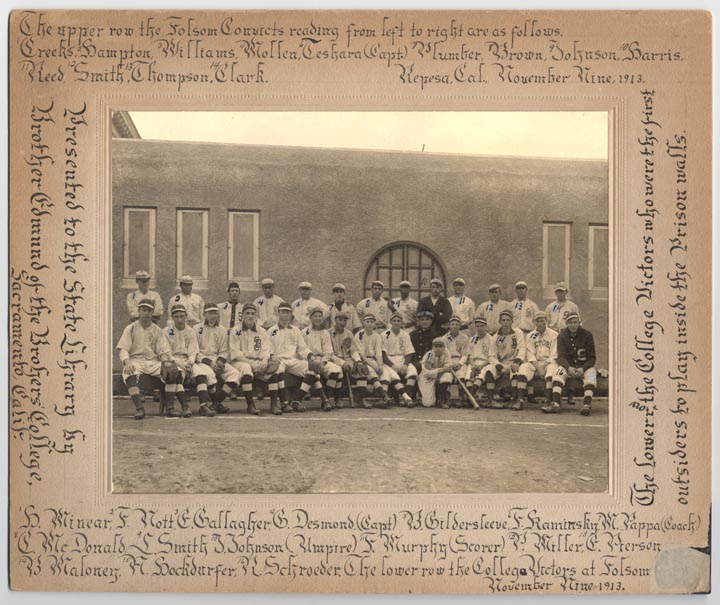
Image: CA State Library 1913

Folsom State Prison started hosting amateur baseball games around 1913, although prior to this, the inmates participated in ball games during the annual July 4th Folsom Field Day that began in 1904. Amateur teams around California even came by for a game. Every weekend and every holiday the teams played; something the convicts—both players and spectators—looked forward to. Prison staff were also enthusiastic about this entertaining break in monotony. Captain of the Guard, P.J. Cochrane said of Folsom’s team in 1921: “I’d like to put this bunch of rock breakers up against that San Quentin nine. And I don’t think any of them would try to ‘break’ going over and back to do it, either,” he added proudly.

America’s favorite pastime, however, could not go without some underground dealings, especially in prison. Outside the prison walls, the “Black Sox” debacle rocked the baseball world in 1919 and in 1928, Folsom experienced their own scandal. Folsom boasted a four-team league, comprised of the Bon Tons, representing the white collar inmates, The Machine Shop, made up of the athletic roughnecks, The Bakers, and the Chapel, whose players were said to have a “religious bent.”

Despite the prison’s explicit rules against betting, players and spectators wasted no opportunity to wager on their favorite players. Currency came in the form of tobacco which in those days, was rationed out twice a month. It was a hot commodity. A clique of gambling inmates soon became the kingpins by not only fixing certain players, but then selling the winnings to the losing bettors at an exorbitant price.  When prison officials caught on, they discovered crooked players on all four teams, “including the supposedly up-righteously Chapel nine,” one newspaper said. The Warden disbanded the teams and officials at San Quentin joked that Folsom’s new teams would be based on its different classes of criminals:

“. . . the forgers will be Short Story Writers teams. The gas pipe thug element will be represented by the Plumbers. Safe crackers, of which there are a large number within Folsom’s confines, have dubbed their team the Bombers. Second story workers, who are to have a representative team, are undecided as yet upon a name. It is said there is divided opinion whether they shall call themselves the Human Flies or the Social Climbers.”


3 Comments

The Fine Art of “Keistering” from Guest Writer, Jason Brick

“You can’t take it with you.” We’ve all heard this phrase when referring to death, but it also pertains to going to prison. But that won’t stop people from trying.

Today, I bring you a great post from  writer, Jason Brick who as you may recall, posted a stupid criminal story earlier. Jason has volunteered in prisons and has taught self-defense to prison guards and  parole officers. He has heard his share of stories and seen plenty. This story, I’d much rather read about, than see.

When you go to jail, they take all your stuff. Sure, they provide you with clothing, toiletry, reasonable access to books and writing implements. But some things — especially drugs, money and weapons — you’re going to have to do without.

Unless you smuggle it in. Criminals are creative and resourceful when it comes to smuggling stuff inside, just as prison staff has become resourceful and thorough about stopping them. One of the more…interesting…ways to bring contraband into jail with you is a practice called “keistering.”

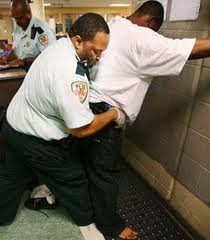
It’s pretty much exactly what it sounds like. When you keister an object, you insert it into your rectum and push it in far enough that a normal cavity search won’t spot it. Once you have a little privacy, you push it out the same way you do when going number two. Gross, but effective.

However, the annals or criminal anality occasionally bring to light stories of keistering that boggle the mind…

  •  Knives are a commonly keistered item, presumably for self defense. They are usually — but not always — covered with a protective sheathe.
  • Some smuggled knives and drug pipes measure in excess of 7 inches long.
  • In February of 2011, a Sarasota convict was caught keistering objects including a grocery store receipt and a paper coupon.

And sometimes, criminals get overly enthusiastic…

In March of this year, a California man was caught with a keistered contraband cache including a cell phone, MP3 player, headphones, marijuana, tobacco and $140 in cash.

And to think he eventually planned to put that marijuana and tobacco in his mouth.


4 Comments

The Silent Man of Folsom

I’ve come across bizarre stories over the course of my research and for those tales that won’t be in the book, I like to share them on this blog. This is one of those fascinating stories that I felt compelled to spend some extra time looking into so I could bring it to you.

Charles Carson nearly became one of Folsom’s 93 and perhaps the title of the book would have been Folsom’s 94. Carson sat in Folsom’s back alley, or condemned row, for seven years; seven years of solitary confinement. He escaped the noose by never uttering a word.

I should start at the beginning of his story though. From the age of nine, Carson was in and out of juvenile halls and eventually prisons. In the early 1900s, while sitting in a cell at San Quentin, he and a buddy formulated their next crime for after their release. Staying true to his word, Carson followed through with the planned, but unsuccessful, robbery. He earned himself a life sentence at Folsom prison.

Not one to be idle, Carson and six others attempted to make a break for it from the quarry in 1904. Two guards and several of the conspiring escapees were wounded by gunfire. Carson and two others, J. Finley and F. Quijada, were all considered the ringleaders, and each received the death penalty in 1906. A bummer, thanks to Jacob Oppenheimer, Folsom’s 28th execution (but not until 1913). You see, Jake kept attacking and/or killing fellow inmates and guards, but since he was serving a life sentence, he merely ended up being transferred back and forth between Folsom and San Quentin. Prison authorities and law makers grew tired of Oppenheimer’s murderous ways, so they devised a plan. They passed a law in 1905, declaring that any inmate serving a life sentence who is found guilty of assaulting or murdering a fellow inmate or prison official, will automatically be given the death sentence. They figured it was only a matter of time before Jake attacked or killed again.

So Carson’s pals kept him company—for a while. Finley was granted commutation to a life sentence and Quijada? Well . . . he happened to be rooming next to Oppenheimer and as presumed, Oppenheimer himself took care Quijada, a one-armed Indian in 1911.

Back to Carson . . . By 1909, after pending appeals, he still sat in the shadows of the gallows. Then, in September, Carson suddenly and without apparent cause, lost his ability to speak. The warden and prison physician were rendered speechless themselves; Carson’s ailment baffled them. They requested state asylum doctors examine Carson. Amazingly, three years go by without determining a cause of Carson’s continued “mutism.” In 1912, The Oakland Tribune said Carson was, “Broken in mind and body as the result of six years constant brooding in solitary confinement in the death  chamber at Folsom prison.” It earned Carson another reprieve.

Physicians put Carson through many tests, one of which was the “ether test.” Doctors exposed the silent convict to the gas with the hope that while under “the intoxicating influence of the anesthetic he would lose voluntary control of his vocal organs and reply to questions put to him by the doctors.” Carson never made a sound. Despite this test, doctors declared at an insanity hearing, that Carson was sane, due mostly because the only signs of insanity were silence and blank staring. Back to his lonely cell he went.

Warden James Johnston and prison doc, A. E. Ingersoll weren’t convinced Carson wasn’t nuts. So more tests were ordered. Doctors tried “loosening Carson’s tongue” with the help of hypnotist, Dr. G.R. Hubbell, who did his damnedest to put Carson into a hypnotic state. It didn’t work. Hubbell opined that Carson was a malinger since Hubbell’s other mentally ill patients always respond to hypnotism.

“Electricity applied in a mild form” only produced a throat noise from Carson, but it still was the first sound from Carson in three years. Docs then tried the old water trick: tossing the patient from a hot water bath to a ice cold one. Again, no response.

Apparently, doctors grew desperate and threw a bowl of scalding soup at Carson’s face. It didn’t elicit the desired effect. In fact, it didn’t elicit much of an effect at all from Carson.

While riding the waves of yet another reprieve, Carson went up again in front of an insanity jury. Witnesses who testified against Carson at the original hearing, now changed their tune. They told the jury they felt Carson was certifiably insane. The panel decided that Carson finally earned himself a bed at the state asylum in Stockton. While there, Carson was caught smiling—the first observed display of emotion since 1909. Even though this remarkable gesture made the newspapers, it appeared to have little, to no effect on his mental patient status.
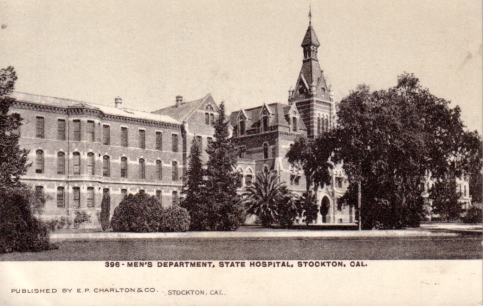
Stockton State Hospital/Asylum, 1910

Still under the sentence of death, Carson was given the ether test again—which he passed with flying colors. Carson spent the next couple of years being tested, and in 1915, Dr. F.W. Hatch, who earlier stated Carson feigned insanity, now declared the convict to be insane.

Finally, in 1917, Governor Hiram Johnson commuted Charles “Silent” Carson’s death sentence to life imprisonment. Carson would spend the rest of his life in the Stockton asylum. Johnson told the press, “I am convinced that at least substantial doubt exists as to the man’s mental condition and that after these many years humane consideration dictates a removal of the death penalty.” Much to the doctors’  surprise, even this news failed to induce a sound from Carson. The guy never uttered a “woo-hoo.” In fact, he maintained his silence for the rest of his life.

In 1924, after 15 years of silence and 11 years in the asylum, 42-year-old Carson died from heart disease. Dr. Fred Clark, superintendent of the asylum told the press that Carson, a model patient, spent his time playing cards and reading the newspaper.

Carson went 15 years without speaking. Whether it was self-induced or not, is impossible to determine, but he gained 15 more years of life. Perhaps in the end, Silent Carson had the last laugh.