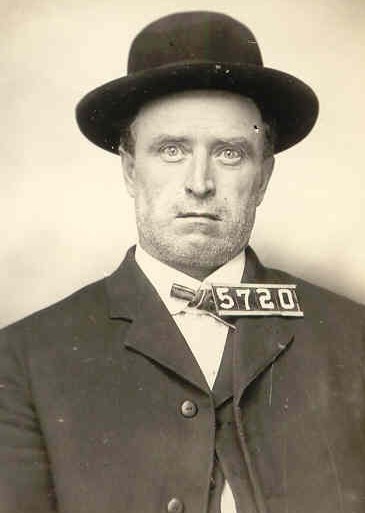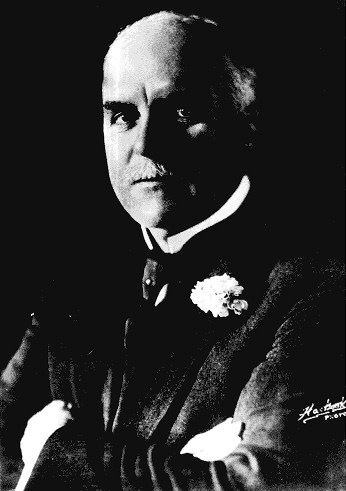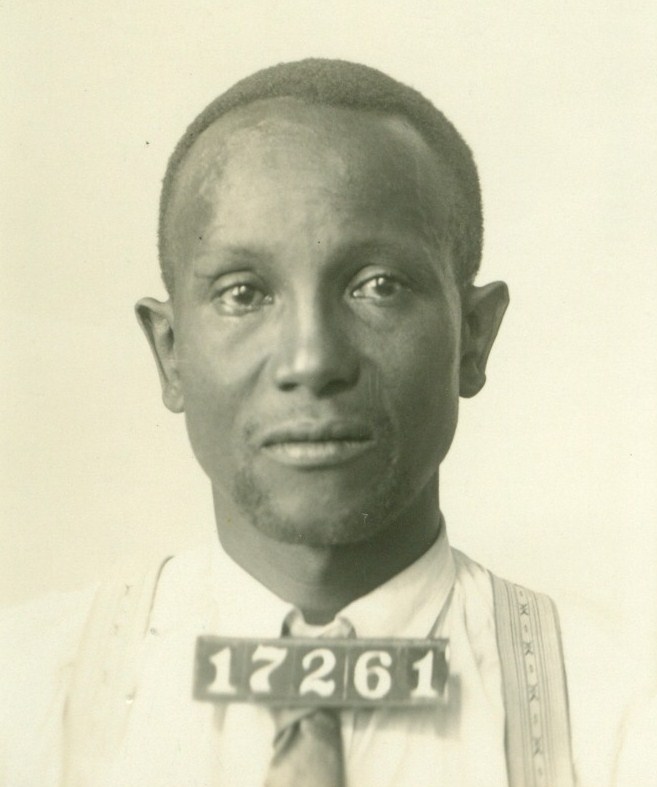
Folsom's 93

The Lives and Crimes of Folsom Prison's Executed Men


6 Comments

Last Suppers

Above is the last meal of a Texas man executed in November 2006. He requested two double-meat bacon burgers, Freedom Fries, BBQ ribs, onion rings, root beer soda, banana split ice cream, and peach cobbler.

This is one of 500 plates Julie Green, an art professor at Oregon State University, has painted over the last five years. She plans to paint fifty more per year until the death penalty is abolished. According to Julie, in Texas, a condemned inmate cannot request a steak. Or bubblegum. In Maryland, requests are not even offered.

There have been more humbled requests:

And of course, what I think we all want.

Julie’s plates have been displayed both nationally and internationally. In fact, her work was exhibited in the Fort Collins Museum of Modern Art where I live, but unfortunately, I missed it. To read more about Julie Green, Last Suppers, and her other work, visit her at GreenJulie. For more on Folsom’s last requests, you can read about them in a previous blog post.


5 Comments

If you see me walking . . .

So this reminds me of the Aretha Franklin song, Walk On By. Absolutely no reference whatsoever, but it brings me to this: How the hell does an inmate walk away from Folsom prison? I’d love to ask Marco A. Cabrera who did just that on Sunday, April 15. Fortunately, police nabbed him less than 24 hours later, but are you kidding me? How does one escape from the city of Gray Granite?

In 1903, 13 prisoners escaped, using the Warden and other guards as human shields. At the time, the prison wasn’t surrounded by walls. So that, I understand. But so far, police haven’t figured out exactly how Cabrera “walked away” from the medium security prison, but they found him hiding in the bed of a truck Monday evening. The poor guy had “injuries from blackberry bushes.” Gosh, that sure makes up for his “assault with a firearm and injury to spouse” conviction. A true gent, this one.

Really though, how does one escape from Folsom prison? At least we know this: 98.7% of escapees since 1977 have been caught. How does that make you feel?


2 Comments

Can I Get a Woot-Woot?

This morning, I completed writing all 93 stories. I am by no means finished with the book, but I am one step closer. It felt like a milestone I needed to brag about.

My husband, ever so patient, supportive, and understanding, asked with hopefulness: “So, this means you’ll soon stop talking about executions at the dinner table?”

Of course not. It just means I have a entered into the land of revisions where I will trudge through the muck of rogue commas, swim through a sea of extraneous words, and fight off swarms of killer (yet inactive) verbs. That’s all.

I’m lucky I belong to a fabulous critique group whose members have traversed this treacherous land before me, so I know I won’t be journeying alone.

So tell me . . . what’s the best revision and editing advice you’re ever received?


Leave a comment

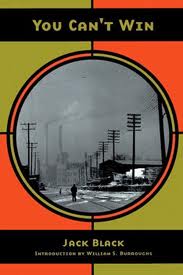
You Can’t Win, by Jack Black

I just finished this autobiography, published in 1926, by Jack Black, chronicling his life as a petty thief, burglar, and opium addict. Black’s crime career began at the age of 15 and for the next thirty years, he shuffled in and out of jails and prisons, including Folsom. In fact, Black was in the midst of an eight-year term at Folsom when the infamous break of 1903 occurred. Though he didn’t partake in the escape, he and fellow inmates received the brunt of the guards’ anger over the break—in the form of the straitjacket. Guards P.J. Cochrane and Richard Murphy (called “Dirty Dick” by the prisoners) relished in using the torturous device.

“After the break Folsom was hell. The warden and Captain Murphy began taking revenge on friends of the escapees . . . Warden Wilkinson was removed and Archibald Yell of Sacramento, took his place. He had no experience and was forced to feel his way slowly. He had to depend on Murphy. This put him in virtual control of the convicts and his lust for revenge went unchecked. I was on the list and he soon got me.” 

Cochrane, tightening the jacket, said to Black, “You fellows tried to kill me; now it’s my time.” Black endured the “bag” for over three days, lying on the floor of a dark concrete cell. This punishment caused disfigurement, broken bones, and even death to many California prisoners between the late 1800s and 1912 when Warden James Johnston banished it.

Black, considered an “honorable outlaw,” earning the respect and admiration of not just fellow thieves, but lawmen as well, finally kicked the crime (and drug) habit in the mid 1920s. He published his memoir in hopes of warning young men from becoming criminals and dope fiends. He also hoped to change the ways of prisons—show the institutions that the use of cruel punishments and the death penalty did nothing to deter crime; that it merely made men more vindictive and revengeful. Black became an outspoken advocate for prison reform and opponent of the death penalty.

“What, in a nutshell, is my case against the right people? I contend that more laws and more punishment will mean nothing but more crime and more violence . . . We need more emphasis on prevention than on punishment . . . The secret of the cure of crime—if there is one—is contained in a knowledge of its causes . . . The right people are working on the wrong end of the problem. If they would give more attention to the high chair, they could put cobwebs on the electric chair. They lay too much stress on what the wrong people do, not on why they do it; on what they are instead of how they got that way.”

Black, who took care of his friends and harbored no ill-feelings against his enemies, became the librarian for the San Francisco Call after leaving his life of crime. He wrote several articles for national magazines and penned many prison dramas for MGM. Fame and recognition soon dwindled, as well as his bank account, and it is said that in 1932, Black committed suicide by drowning in New York Harbor, although his body was never found.

Leave a comment

The California Ballot to Watch

In 1913, Jake Oppenheimer, Folsom’s 28th execution, called capital punishment “a relic of the barbaric age,” acknowledging, “I will not be the last to go before this practice is abolished, but  I will be a martyr to the cause.” Abolishing the death penalty has been urged from various groups since the early 1900s.

Image

In 1925, California Senator, Roy Fellom,  introduced a bill to legislation to abolish capital punishment saying,  “Let’s hope that this horrible spectacle of three men being executed in cold blood by the state of California will be the last of its kind and that the state will never again be subjected to witnessing anything so barbaric.”  He had hoped to save the lives of #49, John Geregac and his accomplices by the passing of the bill, which of course, did not.

John “Smokey” Geregac

Many of Folsom’s 93 expressed their belief that their execution would be California’s last. #55, Ray Arnold said, “If they want to kill me, all right. I am ready to die. I would die gladly if I thought my death would aid in putting an end to capital punishment.”

Ray Arnold

Little did these men know that close to a hundred years later, the debate would be at a fever pitch—and that their own state would be the epicenter of it all. Executions in California have been halted since 2006 when a federal judge declared there to be flaws in the execution process. Come November, California voters will decide whether or not to eliminate the death penalty. According to a September 2011 poll, 48% Californians favor life imprisonment over execution. Right now, it doesn’t appear it’ll be a landslide either way.

According to Death Penalty Information Center there are currently 717 condemned prisoners in California. Across the country, 3, 251 folks are on death row. This op-ed piece, points out that abolishing the death penalty would save the state of California $100 million over three years, putting more police on the streets. It would also fund community programs, educate the  prison population, and force those serving life without parole to work and pay restitution to the victims’ families.

It will certainly be the ballot to watch considering California has the highest number of death row inmates, Texas taking the #2 spot with 321. Where does your state rank?


Leave a comment

The Ones Who Got Away

I apologize for not posting more often, but I am engulfed in writing something else, namely, my book. Which is really a very good thing considering I have a deadline looming over me. I’m currently working on Folsom’s 19th and 20th executions; men hanged for their participation in Folsom’s first prison break that left a guard dead.

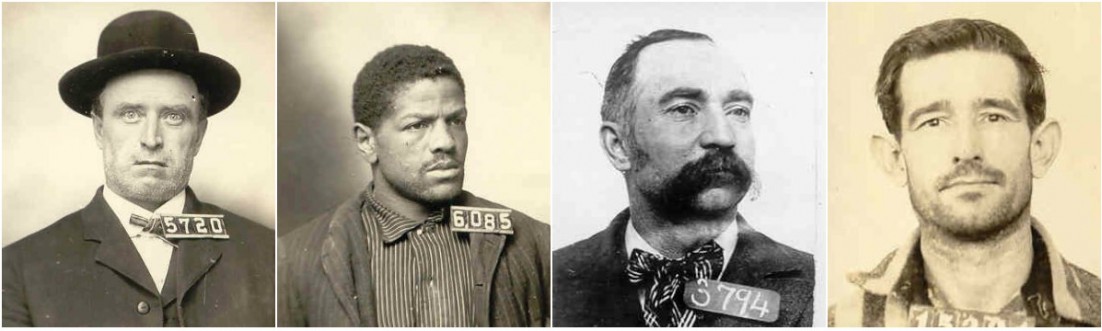
#19, Joseph Murphy

#20, Harry Eldridge

Thirteen men escaped that day in 1903. Only six were actually recaptured (one in 1910), one died from a self-inflicted bullet, and five never saw the inside of Folsom prison again. What happened to these men? It is rumored that a couple sustained injuries during the battles with sheriff’s men who pursued them, but no one recovered their bodies in the hills where they fought.

As a lover of fiction (both reading and writing it), it’s hard not to spin stories in my head about these liberated convicts. For a while, a trend in writing, seemed to be authors picking up the story where history left off—or where literary geniuses closed the chapter. Consider Ahab’s Wife, Mr. Timothy, and even Girl with the Pearl Earring. What’s the story behind the story, or in the last example, the painting?

Have you ever wanted to rewrite history? Other writers have proven it can be done. If you’re seeking an idea, sometimes looking back in history will spark something. Find a story that needs an ending and write it. For these six men who secured their freedom in 1903, their stories ended in some way or another, but they’re not told in newspapers or books. I’m thinking perhaps when I’m finally done sharing their tales according to the history books, I’ll work on writing the rest of their stories.


3 Comments

Prison Guards and Self Defense by Jason Brick

.
Correctional Officers at Folsom prison do not carry guns while on duty. They abandoned this practice around 1915, after #30, Frank Creeks killed a guard and made off with two gatling guns the guard had been bringing inside the prison. 
.
#30, Frank Creeks
.
When I met with Folsom correctional officers earlier this year, I learned that guards do carry pepper spray and a whistle. Other than that, they have only their wits and quick thinking to rely on. Today, I wanted to bring you another guest post from Jason Brick regarding prison guard self-defense. Take it away, Jason . . .

Self-defense for prison guards centers around setting things up so the guards rarely need to use self-defense.

In the beginning of modern law enforcement, this meant finding large, intimidating, violent guards and making sure they were the only people carrying weapons. That deterrence — combined with what amounted to carte blanche in using the weapons — kept guards reasonably safe by making sure people rarely started a physical confrontation.

As our society became more modern and aware of prisoners’ humanity, training changed its focus — but continued to focus on preventing altercations. Corrections officers received training in joint locks, defensive tactics and weapons common on the tiers — such as batons. In addition, they learned team tactics intended to stop a potential problem before it began. This ranged from how to avoid getting in one another’s way, up to spacing and psychological considerations to keep a prisoner off balance and intimidated.

Modern training incorporates concepts from military combatives, boxing, wrestling, judo and jui jitsu. It’s similar to what you might get in an applied self-defense course, with two major differences.

Focus on prevention — the bulk of corrections combatives focuses on setting up a scenario so you never have to become violent. This can include your positioning, the positioning of other officers, verbal redirection and the construction of a facility to give all advantages to the officers. Every once in a while a prisoner will decide to fight anyway, but this keeps most people in line.

Submission over destruction — aiming to get prisoners to settle down, rather than cause injury. The best example of this is the baton training. If you took a stick or baton class for self-defense, you’d learn to target the elbows, wrist, knees and head — areas that are easy to destroy that can take somebody out. In corrections training, officers learn to hit the upper arms, thighs and the broad planes of the back. These areas hurt, but don’t injure. Submission holds and joint locks take the same focus.

One final note is that the techniques officers learned are for the day-to-day control of prisoners. If a prisoner actively attacks a corrections officer, all bets are off. That officer is — generally — allowed to use whatever techniques he needs to get to safety. Retaliation is never tolerated, but if a prisoner gets injured while trying to injure a guard, that’s not considered the guard’s fault.


Leave a comment

Saved by scruples . . . against the death penalty

Former California Governor James Rolph, Jr., wasn’t shy about his opposition toward the death penalty. During his reign as Governor from 1931 to 1934, Rolph promised every condemned man at least one reprieve. He held true to his word, even issuing nine reprieves to Folsom inmate and #80, Pat Nobles. Rolph undoubtedly would have issued more had he not  taken ill and died in June, 1934.

#80, Pat Nobles

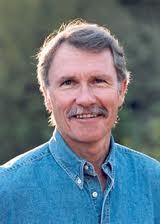
Today, a Governor’s obvious scruples against the death penalty is making headlines. Oregon Governor, John Kitzhaber, just declared that no prisoner will be legally executed on his watch. Since his governorship began in 1995, Kitzhaber has allowed two executions to take place in Oregon, but he now admits he regrets those executions.

“I simply cannot participate once again in something that I believe to be morally wrong.”

“It is time for this state to consider a different approach.”

Critics say Kitzhaber is “usurping the will of voters” who support the death penalty, but this decision is not an about-face. His opposition was well-known which impacts the lives of 37 death row inmates in Oregon, one of which was scheduled to die on December 6th. Kitzhaber defended his position, saying . . .

“The reality is that, in Oregon, our death sentence is essentially an extremely expensive life prison term,” Kitzhaber said. “Far more expensive than the terms of others who are sentenced to life in prison without parole, rather than to death row.”

Kitzhaber, a licensed doctor, cites his physicians’ oath, “to do no harm,” as part of his decision. He was recently elected to  an unprecedented third term as governor and there’s no question every move he makes, from here on out, will be closely scrutinized.

Next year, California voters will be faced with the same monumental decision: Should the death penalty be abolished?


Leave a comment

The writing planner is here!

The 2012 writing planner is finally here! Actually, it came together surprisingly fast. After doing 13 illustrations in a month, it’s great to see them all together in a finished product. You can order one for $13.95 and pick it up at the NCW Studio or $18 if you need it shipped. It feels great getting back into illustration, but the planner is hopefully going to help me write and stay on track so I can finish Folsom’s 93.

Alice in Wonderland

Peter Pan

Life of Pi

Kerrie Flanagan (creator of the planner) and I hope that it will help writers set and accomplish their goals. Kerrie even added a Submission Tracker page in the back. If you live in the Fort Collins area, stop by the NCW Studio on Friday, November 25th and Saturday, the 26th from 9-3 for the annual Holiday Mart. There will be lots of handcrafted items and food, as well as journals featuring a few of the planner’s illustrations.

Have a great Thanksgiving!


Leave a comment

Where’s Waldo?


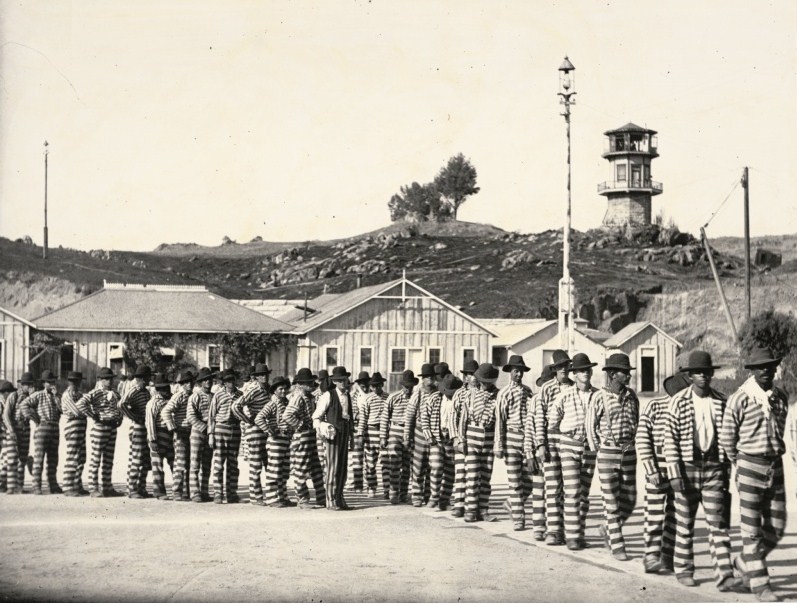
The photo, taken of Folsom State Prison inmates, circa 1895, is on display at the Crocker Art Museum in Sacramento.