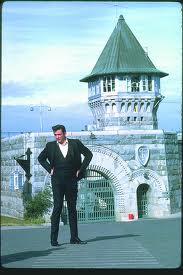
Folsom's 93

The Lives and Crimes of Folsom Prison's Executed Men


3 Comments

The Death Penalty and the Mentally Ill

First of all, “insanity” is a legal term but in the medical profession, the preferred term is “intellectual disability.”

This is not to be confused with diminished capacity which is defined as an impaired mental condition, caused by disease, trauma, or intoxication but short of insanity, that can reduce the criminal responsibility of a defendant. Not all states allow defendants to offer this plea in response to criminal charges.

Albert Einstein defined insanity as, doing the same thing over and over again and expecting different results.

Today, the American Law Institute Model defines it as: a defendant is not responsible for criminal conduct “if at the time of such conduct as a result of mental disease or defect he lacks substantial capacity either to appreciate the criminality of his conduct or to conform his conduct to the requirements of the law.” The test thus takes into account both the cognitive and volitional capacity of insanity.

Eighteen of the ninety-three men executed at Folsom prison, had pleaded insanity at least once during their legal process.

#41, James Tyren murdered his 2 children
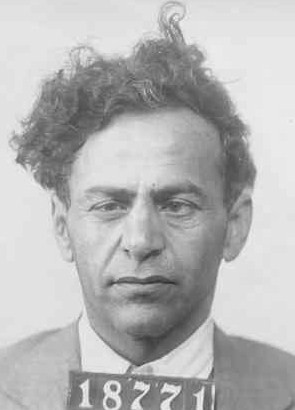
#81, Mike Lami murdered his wife

In 1924, #45 Alex Kels underwent a procedure to have fluid extracted from his spine in an attempt to determine if a suspected case of syphilis had infected his brain, causing him to murder his victim. This test rocked the state of California and engaged governor Friend Richardson and the state prison board in a nasty debate that waged on for weeks.

Robert Wilbur of Truthout wrote a fascinating article entitled, “Killing the Mentally Ill.” I encourage you to read the article—I found it extremely eye opening. In 2002, the United States Supreme Court ruled that it was “cruel and unusual punishment,” to execute an inmate deemed “mentally retarded,” therefore, a violation of the 8th Amendment. And exactly how easy is it for the defense to prove their client is insane, or was during the commission of the crime? In the article, Wilbur talks with death penalty lawyer, George Kendall who often sees those with mental illness face the death penalty. “The prosecutors have the upper hand,” he said. It comes down to money. The state can shell out thousands of dollars to hire experts, where the defense has little money and is faced with the burden of proof. The paycheck these experts walk away with can be well over $200,000.
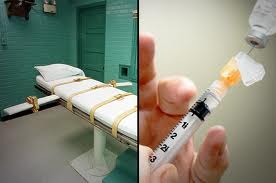
Wilbur noted one such expert, Michael Welner, MD who is proposing to create a “depravity scale” seeking to add an element of “evil” into the definition of some crimes. He strives to define the “worst of the worst” and help determine the truly evil crimes that deserve the death penalty. Uh . . . how exactly is evil defined? Can a panel of 12 peers determine that?

James L. Knoll IV, a senior forensic psychiatrist, vehemently rejects such a proposal. “Embracing the term ‘evil’ in the lexicon and practice of psychiatry will contribute to the stigmatization of mental illness, diminish the credibility of forensic psychiatry, and corrupt forensic treatment efforts.”

According to the Death Penalty Information Center, a man with an IQ of 69, confessed to a crime he didn’t commit, and after serving sixteen years behind bars, DNA evidence exonerated him.

It is estimated that of the 3200+ inmates on death row in the U.S., roughly 5-10% are considered to have intellectual disabilities. No surprise, but Texas has executed 24 mentally impaired people since 1977—the most out of any state.

In January of this year, Colorado governor, Bill Ritter issued a posthumous pardon to Joe Arridy. After reviewing evidence, Ritter found that Arridy, who had the mental capacity of a toddler, should not have lost his life for complicity to a 1936 murder.

WHAT DO YOU THINK? SHOULD THE MENTALLY ILL BE EXECUTED?

Leave a comment

To Execute or Not to Execute . . .

After undertaking the project of writing Folsom’s 93, I know more about the death penalty than I ever imagined I would. It’s the hottest topic that no one is discussing. It sits in the shadows of health care reform, our wars in the Middle East, and Shwarzenegger’s love child. However, states across the country are making headlines by introducing bills to abolish the death penalty and/or make changes to their current laws. What’s your state up to?

Image

I was recently contacted by Chris Cassidy who does work for Amnesty International and he shared with me some fascinating facts about the death penalty and its presence in the United States. He put together this infographic to illustrate where the US stands compared to other countries:

As you can see, the US is still going strong when it comes to executions, but we’ve actually slowed down a bit from 300 in 1998 to 106 in 2009. According to The Death Penalty Information Center, by 2009, 129 countries had abolished the death penalty.

Today in California, there are 704 inmates on death row. According to the DPIC, 63% of 800 Californians polled, favor commutation, thus saving the state $1 billion over the next 5 years. Citizens liked the idea of the money going toward education and law enforcement, however, this controversial issue is far from black and white.

BalancedPolitics.org put together the following pros and cons of the issue:

Yes—Abolishing the death penalty:

  1. Financial costs to taxpayers of capital punishment is several times that of keeping someone in prison for life.
  2. It is barbaric and violates the “cruel and unusual” clause in the Bill of Rights.
  3. The endless appeals and required additional procedures clog our court system.
  4. We as a society have to move away from the “eye for an eye” revenge mentality if civilization is to advance.
  5. It sends the wrong message: why kill people who kill people to show killing is wrong.
  6. Life in prison is a worse punishment and a more effective deterrent.
  7. Other countries (especially in Europe) would have a more favorable image of America.
  8. Some jury members are reluctant to convict if it means putting someone to death.
  9. The prisoner’s family must suffer from seeing their loved one put to death by the state, as well as going through the emotionally-draining appeals process.
  10. The possibility exists that innocent men and women may be put to death.
  11. Mentally ill patients may be put to death.
  12. It creates sympathy for the monstrous perpetrators of the crimes.
  13. It is useless in that it doesn’t bring the victim back to life.

No—Keep the death penalty:

  1. The death penalty gives closure to the victim’s families who have suffered so much.
  2. It creates another form of crime deterrent.
  3. Justice is better served.
  4. Our justice system shows more sympathy for criminals than it does victims.
  5. It provides a deterrent for prisoners already serving a life sentence.
  6. DNA testing and other methods of modern crime scene science can now effectively eliminate almost all uncertainty as to a person’s guilt or innocence.
  7. Prisoner parole or escapes can give criminals another chance to kill.
  8. It contributes to the problem of overpopulation in the prison system.
  9. It gives prosecutors another bargaining chip in the plea bargain process, which is essential in cutting costs in an overcrowded court system.

SO WHAT DO YOU THINK? If it came to the voters in your state on whether or not to abolish the death penalty, could you make a definitive decision?


3 Comments

The Parole Pendulum

In California, the parole system began in 1893. Before that, inmates had only their given credits for good behavior. Inmates used these “coppers” to secure an early release. Despite the draw to stockpile these rewards, prisoners still managed to squander them. The parole system offered relief to overcrowded prisons and the massive amount of pardon applications that piled up on the Governor’s desk. It also gave deserving inmates the chance to make good on their promises to “straighten up and fly right.”

To achieve parole, the prisoner needed to secure a job before he could take one step off the prison grounds. This often proved extremely daunting for some prisoners who had little to no friends or family on the outside. Unless someone could vouch for the inmate, landing an outside job from the confines of prison, was nearly impossible. He was also required to leave a $25 deposit with the warden. The prospective employer usually coughed up this money, as it would pay for the parolee’s return to prison, should he violate the terms of his parole. The employer also had to carry out his promise to employ the prisoner by attesting to it to the county clerk. After the warden, captain of the guard, prison physician, district attorney, and a judge all submitted recommendation letters to the parole board, it was the inmate’s turn. He’d write his own plea to the board and present it to them. If approved, the board gave him his “ticket of leave” and turned him over to a parole officer ( a new addition to the system in 1908).

So finally, wearing a clean shirt and having $5 dollars in his pocket, the inmate is released into a world that is neither sympathetic nor tolerant of him. Griffith J. Griffith, a successful businessman who served time in San Quentin from 1904-06, became a prominent and vocal supporter of prison reform. “If there be a time in a man’s life when he needs encouragement it is after a long confinement, when he leaves San Quentin prison. He is refused work, and if successful in getting a job, men refuse to work with him. If a crime is committed he is arrested on suspicion and frequently locked up for days or weeks without evidence. He is indeed a pariah,” he said.

By 1909, prison officials considered the parole system a success. Of the 609 men released since 1893, 57 violated the terms of their parole, 40 of which were sent back to prison, and 17 had died or slipped the system.

For some men, this freedom wasn’t all that it was cracked up to be. In 1911, William Melton, a Folsom parolee, voluntarily re-entered prison after failing to maintain employment. He claimed that the “stamp of a convict” placed upon him, made life on the outside more trouble than it was worth. He felt that the parole requirements were too difficult to keep up with.

Today, California prisons face a staggering 70% recidivism rate. When the correctional officer at Folsom told me that while we toured the prison, I let out an indignant gasp. But then he reminded me that it’s important to acknowledge the 30% who are making good on their promises. Parolees are given “gate money” (between $200-300) and are assigned a parole officer to whom they report. Inmates eligible for parole have a counselor  to help prepare them for life after prison and can attend “pre-release” classes and GED education. The California Department of Corrections and Rehabilitation offers a Parolee Handbook that illustrates the tools available to the convict before and after his release. It may not seem like much, but it’s a far cry from a clean shirt and five bucks.


6 Comments

What’s in a Name?

Robert Stroud, “Birdman of Alcatraz”

Criminals and their nicknames. We’ve all heard of “Scarface,” “Machine Gun” Kelly, and “Pretty Boy” Nelson. Many convicts earned these kinds of monikers from their notorious and often murderous past. Most fellow cons knew never to ask these thugs their real name; a breach of criminal etiquette that could cost the inquirer his life.

Clarence Morrill, chief of the bureau of criminal identification in 1928, said, “Criminals of every order, low and high, have a moniker by which they are known. One may ask their nicknames with impunity, but never the names their mothers gave them.”

Folsom prison may not have been home to the Birdman, but it has had its share of nicknamed bad boys, too.

Image
Gregg, Gleason, Stokes, Burke, Stewart & Brown

 In 1927, Folsom played host to The Thanksgiving Day Riots that left 10 convicts and 1 guard dead. For those considered to be the ringleaders, the riot earned them certain nicknames.  Forger, Albert Stewart was called “The Penman” but after turning states’ evidence against his fellow rioters, he is forever known as “The Squealer.” #61, Anthony “Tony” Brown, became “Bloody” Brown. His co-conspirators: #63, Walter E. Burke was “Scarface,” #64, James Gregg became “The Weasel,” and #65, James Gleason was “The Rat” as he was expected to “squeal” at trial.

In 1903, 14 Folsom convicts escaped. One of them was “Red Shirt” Gordon, named for the shirt given to “incorrigibles” to wear. Authorities never recaptured him.

Geregac

#49, John Geregac was called “Smoky,” “Smokey Jack” and “Smokey John Geregac”

McCabe & Harris

Fellow cons called #69, Wilbur McCabe, “One-Eyed Mac,” while #78, Daniel Harris earned the name, “Mexican Dan.”

Sloper

Thomas Griffin, simply known as The Owl and his crime partner, #53, Felix “The Lone Wolf” Sloper, robbed banks together.

Shannon & Connelly

#51, John Connelly’s hair sported a white streak, hence the nickname “Silver,” or “Silver Joe Kelly.” #57, Willard Shannon’s hair color prompted people to call him “Red.” One newspaper wrote, ” . . . he presents a grotesque appearance with his auburn hair.”

Mathews & Farrington

Those in criminal circles called #47 Robert Mathews “Sugar Baby,” while # 74, Peter Farrington was called “Little Spud.”

Dale

Apparently, people couldn’t decide on #92, Lloyd Dale’s nickname. He was known as “West Coast,” “West Coast Smith,” “Whiskers,” “Coast to Coast,” and “Coast kid.”

The media oftentimes awarded convicts certain names of their own—names the prisoners usually didn’t care for: #28, Jacob Oppenheimer:  The Human Tiger (also called The Human Hyena), #45, Alex Kels: the Haystack Murderer, #88, Earl Budd Kimball: Werewolf of Fulda Flat, #1, Chin Hane: King of the Highbinders, and #27, Edward Delehanty: Black Demon.

Sometimes, the victims themselves had monikers such as, “Queen of the Sacramento Tenderloin,” “St, Louis Fat,” Elgar “Moose” Morse, and Frank C. “Spike” Angermier.

It’s highly unlikely, but should I find myself behind bars, I would need a damn scary nickname to hide behind. I’d have to make it up, of course, but I figure “The Mutilator” would keep me relatively safe.

WHAT WOULD YOUR CRIME NICKNAME BE?


Leave a comment

Preserving Folsom’s History

Guided by retired middle school teacher and historian, Ed Hodges, students from Hoover Middle School in San Jose, California are restoring tables manufactured at Folsom prison in the 1920s and ’30s.

The 7’x3′ tables are being sanded, cleaned of graffiti, painted with Varathane, and topped with a sheet of glass. This labor of love costs $250 and the school is seeking those willing to sponsor a table. Read about this great project in the Mercury News and how you can be a sponsor!


1 Comment

The Peculiar Case of Elijah Cravens

Putman

In 1900, George Putman, Folsom’s 13th execution, attempted to set up a plea that when he killed a fellow inmate, he was already serving a 10-year sentence. As the ward of the state, he considered himself legally dead. How could a dead man commit a crime, right?

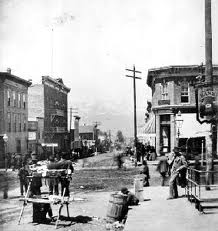
Perhaps he took a cue from Elijah Cravens, discharged of a murder thanks to a county record showing him to be legally dead. Craven’s story began in 1880 in the mining town of Leadville, Colorado. At the time, the promise of abundant silver brought fortune-seekers from all over, many unaccustomed to the severe climate. It also invited an influx of crime and vice and the death toll rose to staggering numbers. The Leadville Undertaking Company found themselves overwhelmed and understaffed.

Leadville, circa 1880

Early one morning, the death wagon arrived at the morgue with what appeared to be a dead guy. In his haste, the coroner certified the deceased as Elijah Cravens who came to his demise by consumption. The coroner transcribed the death into county records and placed the body in a coffin. An old deaf man drove the wagon to the cemetery, but while en route, Cravens emerged from his drunken stupor and kicked himself from the flimsy casket. Without asking questions, Cravens escaped. When the old superstitious driver discovered the empty coffin, he proceeded to bury it and placed a inscribed board at the head of the grave that read: “Elijah Cravens. Aged forty.”

Craven’s near-death experience prompted a change in him. He gave up alcohol, stayed away from his usual haunts, and avoided people when possible. Then he met “Diamond Dick” Reynolds, a wealthy Leadville prospector who offered him a job. He asked Cravens to locate a ranch near Grand River. Cravens agreed and ended up staking valuable land near what is now Glenwood Springs. It proved to be a very lucrative endeavor, earning Cravens thousands of dollars for his role in  establishing the ranch.

After a few years, however, Craven’s mind allegedly began to deteriorate, and he exhibited bouts of uncontrollable anger and hostility. He started drinking again and in September of 1885, he shot and killed a man during a saloon brawl. With the help of an accomplished attorney, Cravens produced the Lake County records indicating he had died five years earlier. According to the law, Cravens was dead, therefore, incapable of committing a crime. The judge didn’t plan on letting Cravens off that easy and sentenced him to one year in jail.

On August 22, 1900, seventy-year old, Elijah Cravens died of pneumonia at the Lake County Hospital in Leadville . . . his last death on record.

Source: Salt Lake Tribune, 1900


1 Comment

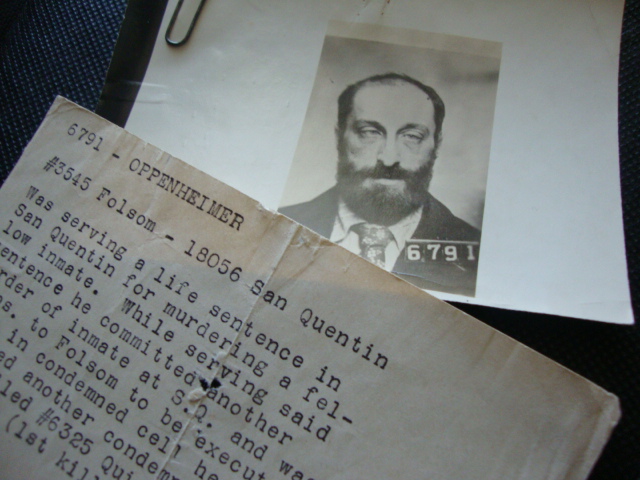
The Human Tiger and his underground telegraph

Jacob Oppenheimer, dubbed The Human Tiger, spent a great deal of time in solitary confinement in both Folsom and San Quentin. In fact, of his 18 years behind bars, roughly 16 of them were in solitary. Only during the last few years before his execution at Folsom in 1913, did guards allow him light, and reading and writing materials. During those years, Oppenheimer penned many essays, letters, and even his autobiography. An extraordinary writer, Oppenheimer possessed a vast vocabulary, intelligence and incredible insight into the outside world and the human psyche.

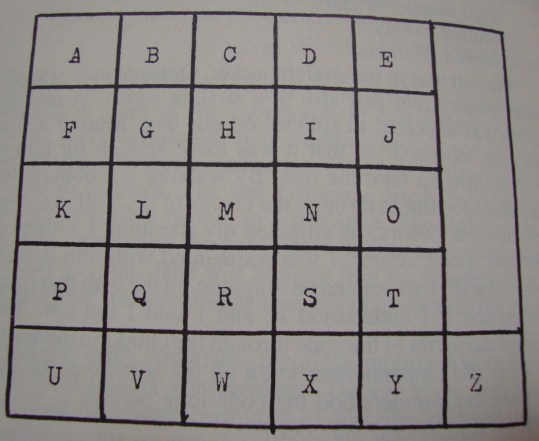
During his dark and lonely days, Oppenheimer developed and perfected a method of communicating with other inmates in the solitary ward, also called the “incorrigible” cells. The method, similar to Morse Code, began with a simple alphabetical diagram Oppenheimer created:

The only time Oppenheimer would speak to the other solitary inmates would be in the prison yard during their thirty minute-a-week exercise where he’d disclose the diagram. The other prisoners then scratched it into a hidden area on the wall of their cell.

Oppenheimer explained to his fellow cons, that a certain amount of taps on the wall represented a certain letter. For example, since “Y” was five over and five down, the inmate would use five taps—twice. “E” the fifth letter, required one tap, then five. At the end of each word or line, the messenger then tapped twice. Over time, other inmates divulged Oppenheimer’s communication system to the new arrivals in the ward, thus saving Oppenheimer the time and trouble.

Oppenheimer’s inventiveness and intelligence far exceeded that of the average convict at Folsom. Despite his dreary solitude, Oppenheimer’s writings exhibited an optimism not common for a condemned incorrigible.  In his letters to his attorney, this “caged tiger” often expressed gratitude and even joy. I’ll leave you with a sentence he wrote, ending a letter written on Christmas Eve 1907,  that seemed to exemplify his usual contentment.

 “The solitude which surrounds me is delightful to a poet for in soothing meditation I soar to heights among the fleecy clouds and into the blue atmosphere. . .”


1 Comment

The Effects of the 1906 San Francisco Earthquake on Crime

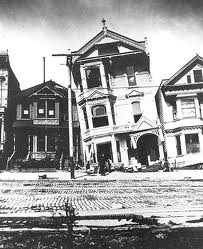
On April 18, 1906, San Francisco shook with the estimated magnitude of 7.9, though some believe it reached 8.25. Subsequent fires from ruptured gas lines then ravaged the city, causing an estimated 90% of the total damage to the city. Just five days earlier, Folsom  executed its 22nd man, William Gray.

Gray

Two hours east of the quake, the gray granite fortress surely felt the early morning rumble, but suffered little to no damage. San Quentin, however, experienced an influx of inmates as prisoners from San Francisco jails were transported to the Marin County penitentiary.

It’s natural to assume crime would run rampant while law enforcement concentrated their efforts on finding survivors and putting their city back together. Surprisingly, crime took a break in the wake of the quake. James Johnston, Folsom’s warden in 1912, called it “a great purifier.”

“It scared the sin out of some people and tore masks off make-believers. Everybody cooked in the street and many slept in the parks, where fresh air and new thoughts could get at them. Button-pushers and bell-ringers took their turn with day laborers cleaning up the debris. There were no saloons to open or close, and nobody seemed to want a drink. The people had before them important business of planning and building a new city while the old still trembled and burned. There was little looting and pillaging.”

Stories are told about my great-great uncle, Tom (who is responsible for me writing Folsom’s 93 in the first place) and his role in the quake. Tom was a teenager in 1906 and his brother (or father—not sure which) was the fire chief of San Francisco—or maybe he was the police chief at the time . . . Anyway, Tom and his friends navigated the city on roller skates, collecting and delivering bodies to the morgue. Between the earthquake and the fire, the death toll reached well over 3,000 and over half of its 410, 000 residents became homeless.

The reprieve from crime didn’t last long. Gas-pipe thugs terrorized the already-stricken residents of San Fran and soon, it was business as usual.


3 Comments

So you say you’re innocent, huh?

Image

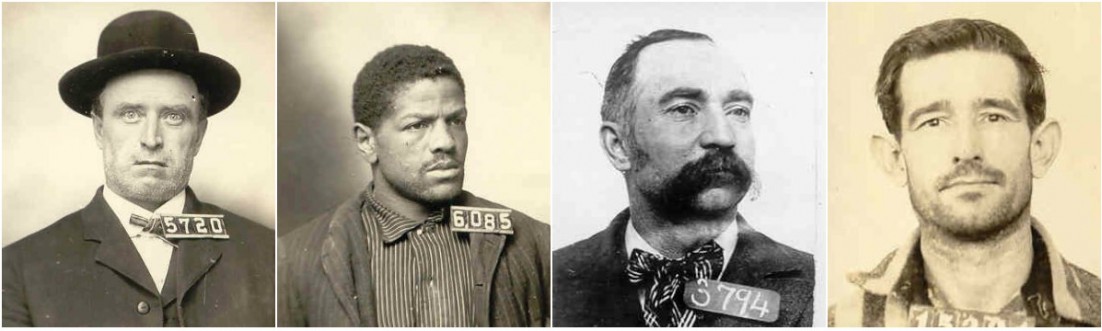
I’m often asked if I believe any of Folsom’s 93 were innocent. “Absolutely,” I usually reply, but can I prove it? Possibly, but when we’re talking about crimes from well over a hundred years ago, original evidence is long gone. Early investigation methods didn’t include the use of crime scene tape, latex gloves, or handy Ziploc bags to preserve and protect evidence. And DNA? Forgetaboutit! That technology came in the mid-1970s. Universal fingerprinting didn’t come along until the 1940s and before that, correctly identifying suspects by their prints oftentimes proved to be unreliable and inaccurate. At the turn of the 20th century, “beyond a reasonable doubt” didn’t exist and a few of the 93 hung by the threads of circumstantial evidence.

Little could separate the guilty from the innocent: a strand of hair resembling the victim found on or near the suspect, association with known criminals, or the color of your skin . . .

Not surprising, many of Folsom’s condemned minorities were doomed the moment of arrest; referred to in the newspapers as the N-word, half-breeds, or ignorant. Even their court-appointed attorney didn’t always have their client’s best interests at hand, or they themselves experienced backlash over representing a minority. The language barrier provided another opportunity for the law to take advantage of a foreign-born suspect, especially since interpreters were few and far between. Investigators easily manipulated an interrogation or testimony by using words the accused couldn’t comprehend.

Judges also didn’t sequester juries to the extent they do today, nor were the juries protected from “tampering.” After the selection of the 12 peers, newspapermen often printed the full names of the jurors in the next day’s issue. Jurors were even often caught dozing off, or snoring away during the trial. Did the judge reprimand the sleepy juror? No.

For some, the appeals process didn’t offer much hope either. Defense attorneys often bowed out after a jury found their court-appointed client guilty. The condemned man had only the hope that the governor would heed his plea for clemency or pardon.

Image

Throughout the course of my research, I struggled to see how some of these men could be found guilty. I think it’s ignorant to assume they each received a fair trial and due process of the law. Today, technology has aided investigators when solving crimes and in many cases, free the wrongfully convicted.

 The Innocence Project is a nonprofit organization dedicated to proving the innocence of those convicted of a crime they didn’t commit. Since its start in 1992, the organization has exonerated 268 people, including 17 who sat on death row. Despite the advances in crime investigation, it’s apparent these methods can’t always stop innocent people from going to prison and for some of Folsom’s 93, this potentially life-saving technology came too late.


10 Comments

I have the “Folsom Prison Blues” blues . . .

I have a confession to make. No, it’s not the murdering kind that many of my once 93 guys made. Mine may be more shocking, actually. Ok, here goes.

I have never listened to “Folsom Prison Blues.”

There, I’ve said it. And I’m not ashamed—I even feel better.

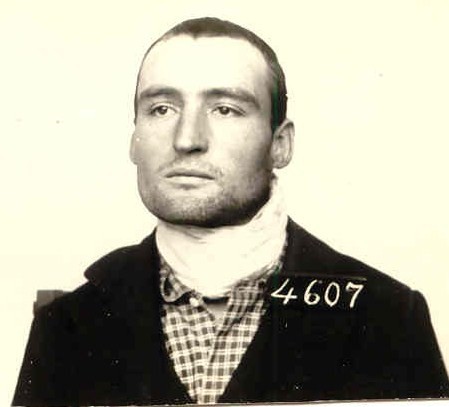
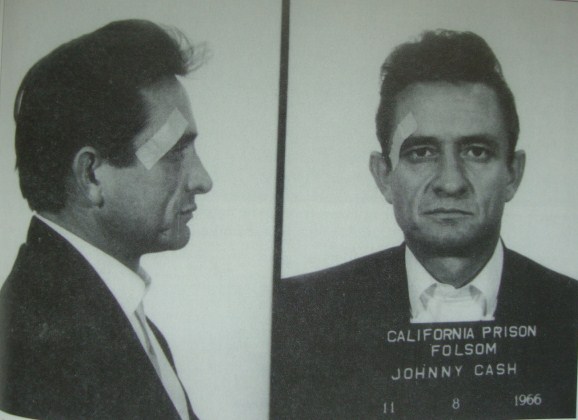
Let me begin with some background: Johnny Cash performed at Folsom prison on November 8, 1966 and later recorded his album, Johnny Cash at Folsom Prison in 1968. Many people think the musician served time at Folsom, possibly because of this mug shot:

Image

(He did in fact spend time in a Texas pen for drug possession charges). In his book, Folsom Prison, Jim Brown explains that Cash had this mock mug shot taken as a joke.  Brown notes that the bandage is presumably designed to make people think guards roughed the singer up a bit. Saul Holiff, son of Cash’s one-time manager, Jonathan Holiff, donated this “mug shot” to the Folsom Prison Museum in 2007.

So what’s my angst with the song? It developed over time. My book covers the years of 1895-1937 and when I began my online research, “Johnny Cash” and his 1960s hit, “Folsom Prison Blues” dominated the results. I promised myself (and everyone else) that I’d give it a listen one of these days. I meant it, too.

As time went on and more Johnny/Folsom stuff kept infiltrating my research, I grew bitter, determined to show that Folsom prison is more than just a song. People assume I’ve heard this popular prison tune and are usually flabbergasted when I tell them the truth. I’ve evolved into one of those curmudgeons, stuck in their ways; holding onto an irrational gripe about something silly, for no apparent reason. When I toured the prison this last January, we strolled past the spot where the concert took place. When the guard pointed it out, you can bet I rolled my eyes. I know, it’s terrible. I developed this absurd hated for a song I’ve never heard.

For those of you who don’t have this illogical aversion to “Folsom Prison Blues,” I’ve included a link to several renditions of this song. Knock yourself out.

TELL ME: HAVE YOU HEARD THE SONG? DO YOU HAVE A FAVORITE VERSION?